IBCC Explores Alternative Education Pathways with GED
High-level consultations in Islamabad focus on expanding flexible educational opportunities, strengthening academic equivalence and aligning Pakistan’s education framework with international alternative learning models.
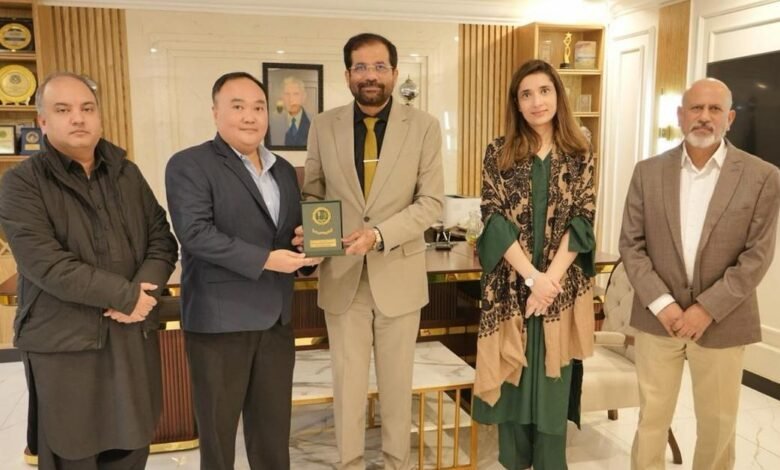
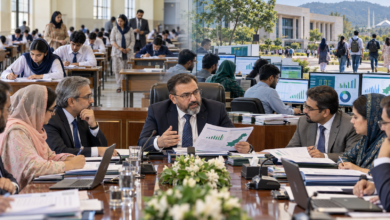
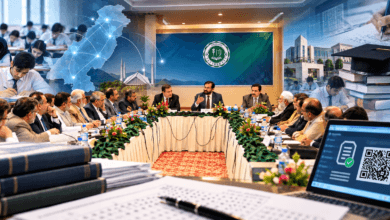
ISLAMABAD, November 25, 2026: The Inter Boards Coordination Commission (IBCC) and an international delegation from the General Educational Development (GED) programme held high-level strategic consultations in Islamabad on Wednesday to explore the expansion of alternative educational pathways, strengthen academic recognition and facilitate access to higher education for Pakistani students.
The meeting, held at the IBCC Secretariat, was hosted by Dr Ghulam Ali Mallah, Executive Director and CEO of IBCC and Chairperson of the Islamabad Capital Territory Private Educational Institutions Regulatory Authority (ICT-PEIRA), alongside IBCC Director General Muhammad Usman Khan.
The international delegation comprised Taweesak Jouchounchom, International Business Development Manager at GED, accompanied by Sidra, representing the GED Pakistan team.
The discussions focused on aligning international secondary education qualifications with Pakistan’s academic recognition and accreditation framework, developing transparent equivalence procedures and facilitating the transition of GED graduates into higher education institutions.
The engagement comes at a time when education systems worldwide are increasingly recognising the importance of flexible learning models that allow students to pursue academic qualifications beyond conventional classroom-based education.
What Is GED?
The General Educational Development (GED) qualification is an alternative to a conventional high school diploma, allowing individuals to demonstrate secondary-level academic competencies through standardised examinations.
Introduced in the United States in 1942, the programme was originally developed to help military personnel whose education had been interrupted pursue further academic and professional opportunities. It subsequently evolved into an internationally available educational qualification.
The GED examination assesses students in four core subject areas:
- Mathematical Reasoning
- Reasoning Through Language Arts
- Science
- Social Studies
The assessment focuses on academic knowledge, analytical thinking, problem-solving and comprehension rather than requiring students to complete a conventional school programme.
GED provides an alternative pathway towards higher education, employment and professional development, subject to the recognition policies of individual countries, universities and regulatory institutions.
Why Alternative Educational Pathways Matter
Traditional education systems generally require students to progress through a fixed academic structure. However, financial circumstances, family responsibilities, geographical mobility, employment commitments and interruptions in schooling can prevent individuals from completing their education through conventional routes.
Alternative educational pathways provide opportunities for such learners to demonstrate their academic abilities through different learning and assessment mechanisms.
These pathways can particularly benefit mature learners, working individuals, overseas families, students with unconventional educational backgrounds and those seeking to resume their education after an extended interruption.
The underlying educational philosophy is that academic competency should not necessarily be determined solely by classroom attendance or the number of years spent within a traditional educational institution.
Instead, appropriately regulated alternative qualifications can recognise demonstrated knowledge and skills while maintaining academic standards.
For Pakistan, the development of such pathways could contribute to a more flexible and inclusive education system, enabling eligible learners to reconnect with formal education and pursue higher academic qualifications.
How the World Approaches Alternative Education
Alternative educational pathways have become an established component of several education systems around the world, although their structures and recognition requirements vary considerably.
In the United States, GED and the High School Equivalency Test (HiSET) provide alternative routes for individuals who have not obtained conventional high school diplomas.
Canada introduced the Canadian Adult Education Credential (CAEC) in May 2024, replacing its GED testing programme with a domestically developed qualification designed to support educational, employment and training opportunities for adult learners.
In the United Kingdom, the Access to Higher Education Diploma provides a recognised pathway towards university education for individuals who do not possess conventional academic qualifications.
Australia offers alternative higher education entry routes through Technical and Further Education (TAFE) institutions, vocational qualifications and university preparation programmes.
Germany also provides opportunities for eligible learners to pursue higher education through vocational qualifications and second-chance educational programmes.
Although these models differ in their structure, eligibility and academic level, they reflect a broader international approach towards recognising multiple pathways to educational achievement.
The Organisation for Economic Co-operation and Development (OECD), in its Education at a Glance 2025 report, also examines alternative tertiary education admission mechanisms as instruments for improving educational flexibility and access.
Pakistan’s Education Challenges and the Need for Flexibility
The discussion holds particular significance for Pakistan, where millions of children remain outside the formal education system.
According to UNICEF Pakistan, approximately 25.1 million children aged five to 16 are out of school, representing around 35 per cent of the country’s population within this age group.
Even in the Islamabad Capital Territory, approximately 90,000 school-age children remain outside formal education, according to UNICEF figures.
UNICEF’s 2025 Annual Report also recorded the enrolment of approximately 71,000 out-of-school adolescents in accelerated learning pathways through its supported initiatives.
These figures underline the importance of developing diverse educational opportunities alongside conventional schooling.
While GED cannot directly address the educational needs of all out-of-school children, particularly those who have not acquired foundational literacy and numeracy skills, it can provide an additional opportunity for eligible learners seeking to resume or continue their academic journey.
The broader challenge for Pakistan is to develop affordable, accessible and academically credible alternative learning models that complement the existing education system.
Existing GED Recognition in Pakistan
Pakistan already recognises GED as an alternative educational qualification, subject to the equivalence requirements prescribed by IBCC.
Under the existing framework, eligible candidates who complete GED may obtain equivalence to the Higher Secondary School Certificate (HSSC) in the Humanities Group.
Students seeking domestic undergraduate admission through this pathway are generally required to complete their Secondary School Certificate (SSC) or an equivalent qualification and observe a minimum two-year gap before undertaking the GED examination.
Candidates must also fulfil applicable preparation-provider and credential-verification requirements.
However, obtaining IBCC equivalence does not automatically guarantee admission to every university or degree programme, as higher education institutions maintain their own academic eligibility criteria.
The Humanities Group equivalence also has implications for students seeking admission to specialised degree programmes requiring specific science or mathematics qualifications.
Opportunities and Challenges
The expansion of alternative educational pathways could help Pakistan diversify its predominantly conventional academic structure, improve educational mobility and create additional opportunities for students requiring greater flexibility.
However, affordability remains an important consideration. International examination fees, preparation expenses and English-language requirements may limit access for students from economically disadvantaged backgrounds.
Quality assurance, transparent assessment standards, institutional recognition and coordination with universities are equally important to ensure that alternative qualifications provide meaningful academic opportunities.
Any future expansion of GED recognition would therefore require careful coordination between IBCC, higher education institutions and relevant professional regulatory bodies.
Strengthening International Educational Cooperation
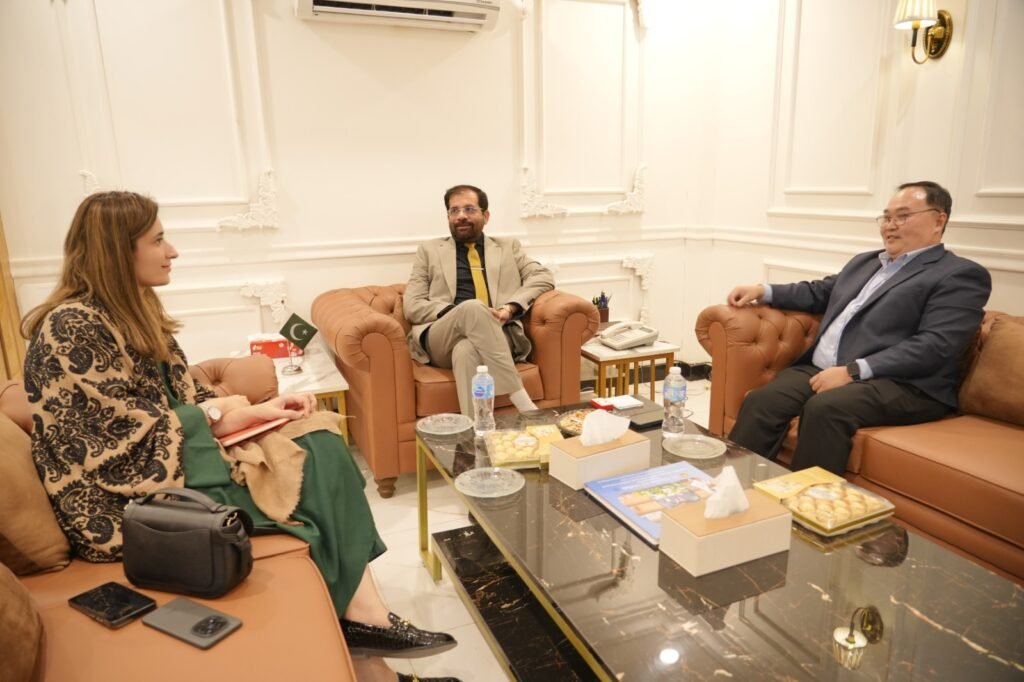
During Wednesday’s consultations, IBCC and GED representatives explored opportunities for closer institutional collaboration, reviewing academic recognition and equivalence criteria and facilitating the transition of GED graduates into Pakistani higher education institutions.
Participants also discussed strengthening cooperation between international credentialing organisations and academic institutions to promote quality assurance, educational mobility and internationally aligned academic standards.
The meeting highlighted the growing importance of flexible educational qualifications in responding to the evolving needs of Pakistani learners and connecting domestic academic aspirations with international opportunities.
The consultations represent a step towards continued institutional engagement on diversifying educational opportunities while maintaining national academic standards.