
Sacred Site or Picnic Spot? Children Swimming at Faisal Mosque Raise Questions
Footage prompts debate over visitor conduct, supervision and the upkeep of facilities at Islamabad’s iconic mosque.

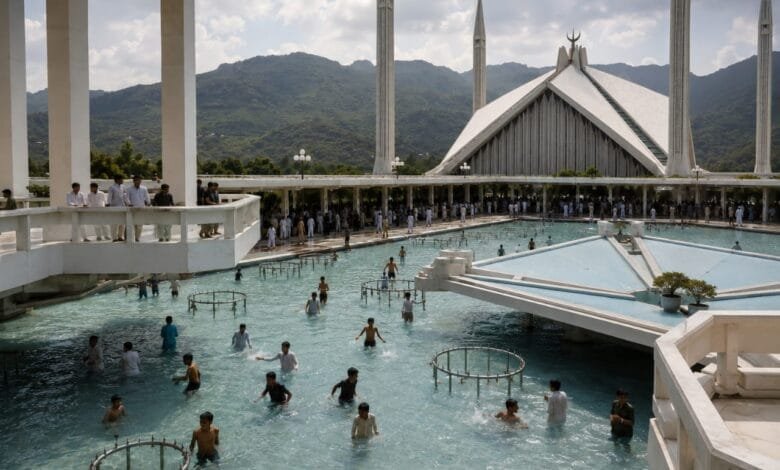
ISLAMABAD: Footage showing people using the fountain area at Faisal Mosque for swimming has raised concerns over public conduct and the management of facilities at one of Pakistan’s most prominent places of worship.
The footage shows individuals entering the fountain area for recreational purposes, prompting questions about how such activity was allowed to take place within the mosque complex and whether adequate supervision is in place.
The incident has renewed discussion over the responsibility of visitors to respect the character of religious sites, while also highlighting the role of the relevant administration in maintaining discipline and ensuring that facilities are used for their intended purposes.
Faisal Mosque Attracts Large Number of Visitors
Faisal Mosque is not only a major place of worship but also one of Islamabad’s most prominent landmarks, attracting worshippers, tourists and visitors throughout the year. The high volume of visitors makes effective monitoring and clear guidelines particularly important.
The episode has prompted calls for stronger supervision of the mosque premises and clearer measures to discourage recreational activities that may be considered inconsistent with the dignity and purpose of the site.
The incident also highlights a broader issue of shared responsibility. While visitors are expected to observe appropriate conduct at a place of worship, the administration is responsible for maintaining order, communicating clear rules and ensuring that those rules are effectively enforced.
The concerns raised by the footage therefore extend beyond the activity itself, putting renewed focus on how public access to the mosque can be managed while preserving its religious character, discipline and dignity.


I agree that this incident is condemnable. Visitors should be mindful of the mosque’s sanctity, and it is equally the administration’s responsibility to ensure this respect is maintained.
Additionally, there should be a strict rule for the government: officials should not permit foreign non-Muslim delegations to enter without removing their shoes, and dogs should not be used to search the mosque premises for the security of these visitors.