Rawalpindi Children Hospital Project Gets Push for Timely Delivery
Long-delayed Asghar Mall hospital project, originally launched in 2005, reaches 34% overall physical progress as authorities target OPD operations by April 2027.

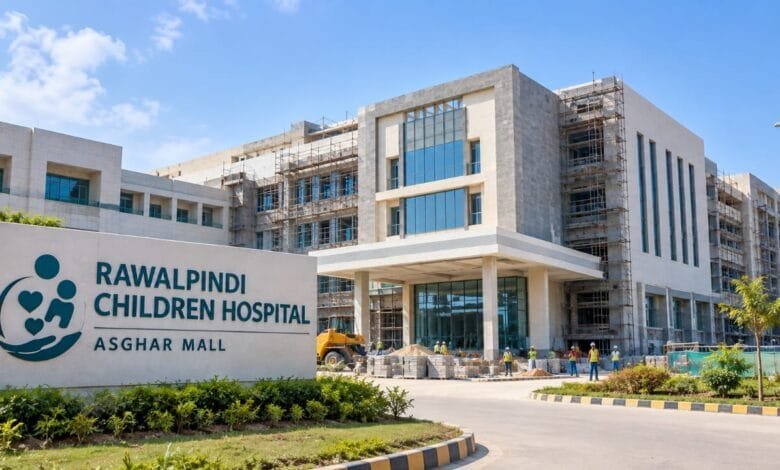
RAWALPINDI: The long-delayed Children’s Hospital project at Asghar Mall has reached 34 percent overall physical progress, as the Rawalpindi administration pushes ahead with work on the 400-bed specialised healthcare facility and targets the launch of its Outpatient Department (OPD) by April 2027.
Work Progress
Commissioner Rawalpindi Division Salman Ghani reviewed progress on the project and directed the departments concerned to maintain the pace of work and ensure timely completion of the hospital and its allied infrastructure.
According to the latest briefing, civil works at the hospital have reached 80 percent completion. Work on the heating, ventilation and air-conditioning system, including pumps, air handling units and ducting, has also reached around 80 percent, while electrical installations and the biogas system are reported to be 90 percent complete.
The project also includes two tubewells and a rainwater-harvesting system being developed with the assistance of the Water and Sanitation Agency (WASA).
Officials informed the meeting that the hospital’s OPD is targeted to become operational by April 2027, subject to work proceeding according to schedule.
Project Delayed Since 2005
The project’s history, however, stretches back more than two decades. The facility was originally launched in 2005 as the Mother and Child Hospital project but subsequently faced prolonged delays. Recent government efforts have focused on reviving, redesigning and completing the long-pending healthcare facility. Earlier reports citing different progress figures and deadlines reflected previous stages of the project rather than the latest briefing.
Under the current plan, the facility is being developed as a 400-bed Children’s Hospital. The expansion is intended to significantly increase access to specialised paediatric healthcare for residents of Rawalpindi and surrounding districts.
The hospital is expected to provide modern diagnostic and treatment facilities, including specialised medical equipment such as an MRI machine.
Supporting Infrastructure
Ghani directed the relevant departments to ensure that essential supporting infrastructure is developed alongside the main hospital building. This includes electricity and gas connections, water supply, sewerage, parking, access roads, fire-safety arrangements, oxygen supply and IT networking.
The commissioner stressed that these services should be ready when the hospital begins receiving patients so that medical operations can start without infrastructure-related disruptions.
Once operational, the hospital is expected to provide specialised treatment closer to home for children from Rawalpindi and neighbouring areas, reducing dependence on other major healthcare facilities for paediatric services.
The review meeting was attended by senior health and development officials, including representatives of Rawalpindi Medical University, Benazir Bhutto Hospital, Holy Family Hospital and other departments associated with the project.