Pakistan Targets 10,000 AI PhDs and Training for One Million Youth Under Digital Push
Shaza Fatima outlines five-year ambitions at Islamabad’s Margalla Dialogue, alongside an earlier $1 billion investment pledge and plans for stronger computing infrastructure and data governance.

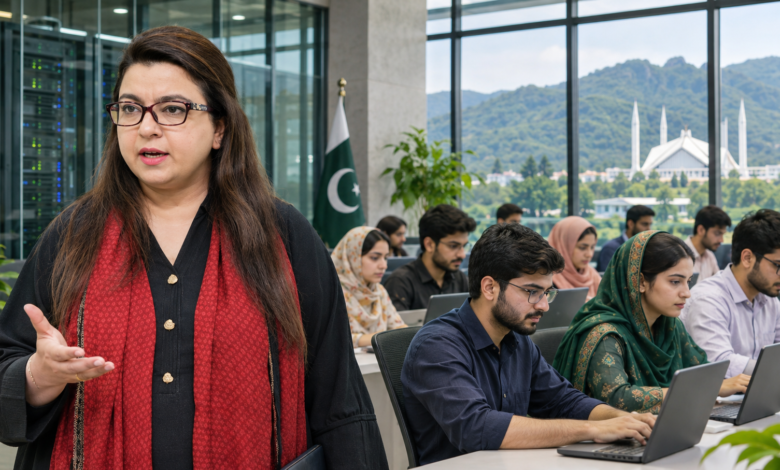
ISLAMABAD: Pakistan aims to train one million young people in artificial intelligence and produce at least 10,000 AI PhDs over the next five years, Federal Minister for Information Technology and Telecommunication Shaza Fatima Khawaja said, outlining the government’s ambitions to strengthen research capacity and prepare its workforce for technological change.
Addressing the Margalla Dialogue 2026 in Islamabad on Wednesday, November 11, the minister linked the skills targets to a wider programme covering computing infrastructure, innovation and connectivity. She recalled the government’s previously announced commitment to invest $1 billion in artificial intelligence.
The announcement places advanced research and workforce training at the centre of Pakistan’s efforts to participate more actively in the global AI economy, with the government seeking to expand domestic capabilities and improve access to emerging technologies.
The five-year target of 10,000 AI doctorates is distinct from the 1,000 fully funded PhD scholarships announced by Prime Minister Shehbaz Sharif at the inauguration of Indus AI Week in Islamabad on February 9.
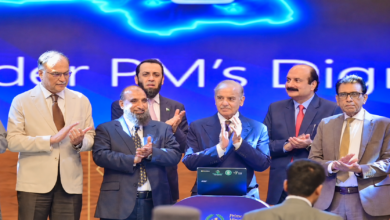
Under that earlier announcement, the government pledged $1 billion in AI investment by 2030, alongside the scholarships and a nationwide programme to train one million non-IT professionals. The prime minister also announced the introduction of an AI curriculum in federally run schools.
The latest remarks describe a broader doctoral training ambition, but the available announcements do not explain how the 10,000-PhD target would relate to the earlier scholarship programme. They should therefore not be read as an announcement of 10,000 fully funded scholarships.
Similarly, the $1 billion figure represents an investment commitment rather than confirmation that the full amount has already been released or placed in an operational fund.
AI Skills and the Changing Employment Landscape
Speaking about the changing employment landscape, Ms Khawaja said the ability to use AI would become increasingly important as technology reshaped work across different sectors.
She cited projections that AI could become a $4.8 trillion global economic sector by 2033 and affect approximately 40 per cent of employment worldwide, emphasising the need to prepare people for changing skills requirements.
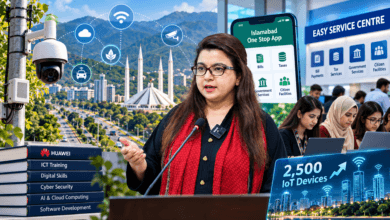
The minister said Pakistan had designed a seven-tier AI infrastructure framework intended to make computing facilities available to government organisations, businesses and innovators. Authorities were encouraging several smaller infrastructure investments rather than relying on a single large project.
She also outlined efforts to improve startup access to financing and cloud credits, including work towards a proposed fund of funds with support from the World Bank and other development partners.
Data Governance and Domestic AI Capacity
Alongside infrastructure development, the government is preparing a Data Governance Policy that the minister said would be unveiled within the next few weeks.
According to her remarks, the policy would support secure and responsible information sharing between institutions, improve interoperability and facilitate access to appropriately sanitised data for innovation.
Ms Khawaja also stressed the importance of domestic technological capacity, warning that AI systems developed abroad could influence the cultural, linguistic and religious perspectives of the societies using them.
She called for wider access to computing resources and open-source technologies, arguing that developing countries should have a meaningful role in shaping AI’s development. The minister also referred to work on personal data protection legislation and the need to retain human oversight as public services become increasingly digital.
Internet Speeds, Fibre and 5G Expansion
On connectivity, she reported that internet speeds had increased by 60 per cent over the preceding two and a half years and that fibre connections had grown from around three million to more than six million.
She also said available spectrum had increased from 274 MHz to more than 750 MHz following a major auction, while approximately 1.8 million users had subscribed to 5G services. These figures were presented as government-reported progress underpinning the wider digital transformation agenda.
Building on Earlier AI Training Initiatives
The skills drive builds on the government’s earlier emphasis on extending AI training beyond technology professionals. At Indus AI Week in February, the minister said the objective was to equip people from non-technical backgrounds with tools that could improve productivity and livelihoods.
For prospective students, researchers and trainees, the next practical questions concern programme eligibility, participating institutions, funding arrangements and application schedules. The Margalla Dialogue targets set out the government’s ambition, but do not themselves constitute an admissions notice or scholarship application announcement.