From Balochistan to the Supreme Court, Justice Jamal Mandokhail leaves a record of consequential rulings
Retiring after more than 17 years on the bench, the Quetta-born judge participated in major cases involving parliamentary democracy, property rights, military trials and political representation.
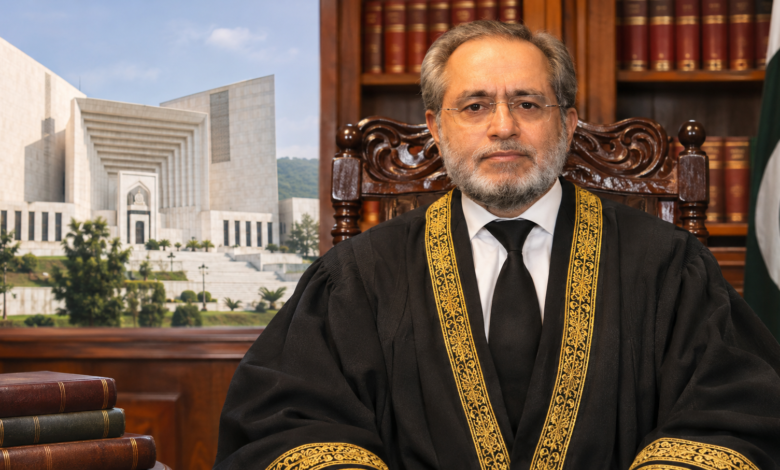
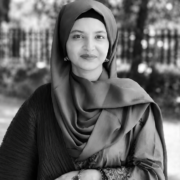
ISLAMABAD: Justice Jamal Khan Mandokhail is due to retire from the Supreme Court on November 11, concluding a judicial career of more than 17 years that took him from the Balochistan High Court to the centre of some of Pakistan’s most consequential constitutional disputes.
Elevated to the Supreme Court on August 9, 2021, Justice Mandokhail has served at the apex court for more than five years. Its published service record lists his date of birth as November 12, 1961, and his retirement date as November 11, 2026.
A full court reference in his honour has been reported for November 11. His departure brings renewed attention to a record encompassing land ownership in Balochistan, the restoration of the National Assembly in 2022, the interpretation of parliamentary defection provisions and dissent over civilian trials in military courts.
Education and Legal Practice in Quetta
Born in Quetta, Justice Mandokhail received his early education at Federal Government High School, Quetta Cantonment, and Government Science College. According to his official Balochistan High Court biography, he studied commerce, political science and economics before obtaining his LL.B from University Law College, Quetta, in 1987.
He enrolled as an advocate on June 1, 1988, qualified to practise before the High Court in May 1990 and became an advocate of the Supreme Court in May 2001.
During approximately 21 years at the Bar, his practice covered constitutional, criminal, civil and service matters. He also served as an additional deputy prosecutor general at the National Accountability Bureau from 2000 to 2001 and taught at University Law College in an honorary capacity.
His professional activities extended to elected Bar positions, including general secretary of the Balochistan High Court Bar Association and vice-chairman of the Balochistan Bar Council. The official biography also records his participation in the lawyers’ movement for the restoration and independence of the judiciary.
From High Court Judge to Provincial Chief Justice
Justice Mandokhail joined the Balochistan High Court on September 7, 2009, and became its chief justice on October 5, 2019. He held that office until his elevation to the Supreme Court in August 2021.
Those appointments gave him almost 12 years of High Court experience before his move to Islamabad, including nearly two years as the head of Balochistan’s superior judiciary.
Property rights were among the prominent subjects of his High Court work. He authored a ruling recognising the claims of indigenous tribes over Balochistan’s unsettled lands, rather than treating those lands as belonging to the provincial government.
He also headed the bench that struck down provisions of the Defence Housing Authority Quetta Act, 2015. That judgment examined the authority’s land-acquisition powers and their compatibility with constitutional property protections.
The Supreme Court subsequently suspended the DHA ruling. Its significance in his career therefore needs to be distinguished from its subsequent legal status: it was an important High Court decision, but should not be presented as an unqualified final settlement of the dispute.
The Judgment Restoring the National Assembly
One of Justice Mandokhail’s most prominent Supreme Court assignments came during the constitutional crisis of April 2022.
He was a member of the five-judge bench that unanimously set aside then deputy speaker Qasim Suri’s ruling rejecting the no-confidence motion against prime minister Imran Khan.
On April 7, the court restored the National Assembly to its position before the April 3 ruling. It also held that the prime minister’s advice to dissolve the Assembly, and the resulting dissolution, had no legal effect.
The bench was headed by then chief justice Umar Ata Bandial and included Justices Ijazul Ahsan, Mazhar Alam Khan Miankhel, Munib Akhtar and Mandokhail. His role was as a member of the unanimous bench, rather than the sole author of the court’s decision.
Dissent on Parliamentary Defections
Justice Mandokhail adopted a minority position in another major constitutional dispute the following month.
In May 2022, the Supreme Court ruled by a three-to-two majority that votes cast against parliamentary party directions in circumstances covered by Article 63A should not be counted.
Justice Mandokhail and Justice Mazhar Alam Khan Miankhel disagreed. They maintained that Article 63A already provided a comprehensive procedure for dealing with defection and that adding further consequences through interpretation would go beyond the court’s mandate.
The dissent concerned the limits of constitutional interpretation: whether the court could impose a consequence beyond the mechanism expressly provided in the constitutional text. It did not amount to an endorsement of political defection.
Questions Over Suo Motu Powers and Bench Formation
In 2023, Justice Mandokhail joined Justice Syed Mansoor Ali Shah in questioning the manner in which the Supreme Court took up proceedings concerning elections in Punjab and Khyber Pakhtunkhwa.
Their joint opinion addressed the chief justice’s powers to initiate suo motu proceedings and constitute benches. They also stressed the importance of allowing proceedings already before the Lahore High Court to take their course.
The judges maintained that, when earlier judicial orders were included, the proceedings stood dismissed by four judges to three. That position formed part of the wider disagreement within the court over the composition of the bench and the outcome of the case.
Their intervention placed judicial procedure and the distribution of institutional authority at the centre of the debate, alongside the election timetable itself.
His Position on Civilian Military Trials
Justice Mandokhail’s role in the military-trials litigation requires a distinction between the original judgment and the subsequent appeal.
He was not a member of the five-judge bench that delivered the October 23, 2023, ruling against military trials of the civilians concerned.
He later heard the intra-court appeals as a member of the seven-judge constitutional bench. On May 7, 2025, that bench allowed the appeals by a five-to-two majority, overturning the earlier ruling.
Justice Mandokhail and Justice Naeem Akhtar Afghan dissented. They would have dismissed the appeals and maintained the earlier decision against those civilian military trials.
His opposition was therefore expressed through a minority decision in the appellate proceedings. Describing him simply as a member of the original bench would misstate the judicial record.
What His Position on the 39 Seats Meant
Justice Mandokhail also took a distinct position in the litigation over reserved seats following the 2024 general election.
In his July 2024 order, he held that the Sunni Ittehad Council was not entitled to reserved seats on the basis claimed. However, he also concluded that candidates who had declared their affiliation with PTI in their nomination documents should not have been treated as independents by the Election Commission.
His position supported recognising those candidates as PTI members and recalculating reserved-seat allocations accordingly.
The frequently cited figure of 39 referred to elected National Assembly members whose party affiliation was in issue. It did not mean that he favoured directly awarding PTI 39 reserved seats.
In the June 2025 review proceedings, he maintained his original position concerning the 39 seats while accepting review of the majority judgment’s treatment of the other 41 candidates. The review order expressly records that distinction.
Service on Constitutional Benches
Following the 26th Constitutional Amendment, Justice Mandokhail became a member of the Supreme Court’s constitutional benches and served on the committee responsible for constituting them. This placed him within the arrangements through which major constitutional disputes were assigned and heard.
His judicial record spans both unanimous decisions and significant dissents. In the National Assembly case, he joined the court’s collective intervention to reverse unconstitutional parliamentary action. In the defection and military-trials cases, he recorded disagreement with the majority. In the reserved-seats litigation, he distinguished between different groups of elected representatives rather than accepting either side’s position in full.
As he leaves the bench, those judgments and separate opinions provide the clearest basis for assessing his career from his years in Balochistan to his participation in constitutional adjudication in Islamabad.