Ishaq Dar, UN Chief, Holds Key Talks on Palestine, Kashmir and Afghanistan
Talks in Islamabad covered Palestine, Jammu and Kashmir, Afghanistan, counterterrorism and the Indus Waters Treaty, while the UN chief acknowledged Pakistan’s diplomatic efforts, including its role in facilitating US-Iran dialogue.

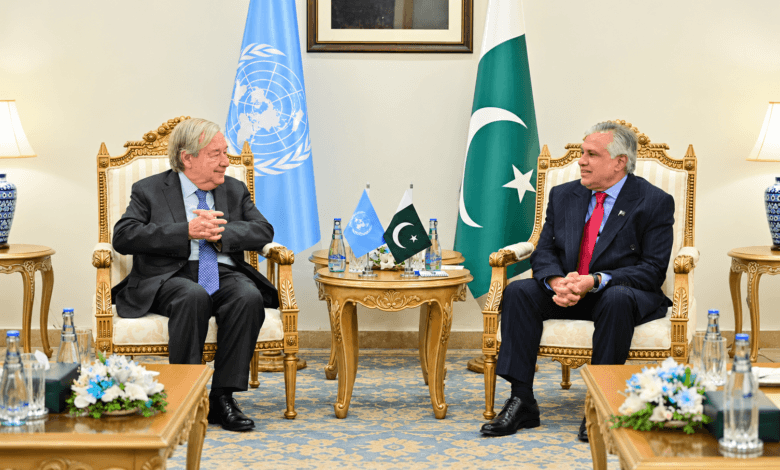
ISLAMABAD, October 6, 2026: Deputy Prime Minister and Foreign Minister Senator Mohammad Ishaq Dar held wide-ranging talks with United Nations Secretary-General António Guterres in Islamabad on Tuesday, with discussions spanning major regional disputes, security concerns and Pakistan’s recent diplomatic initiatives.
Palestine, Kashmir and Afghanistan Discussed
According to the Ministry of Foreign Affairs, the two sides exchanged views on Palestine, Jammu and Kashmir, Afghanistan and counterterrorism-related issues, while Dar also briefed the UN secretary-general on Pakistan’s position regarding the Indus Waters Treaty.
During the meeting, Dar reiterated Pakistan’s position that the Jammu and Kashmir dispute should be resolved in accordance with relevant United Nations Security Council resolutions. The issue has repeatedly featured in Pakistan’s engagements with the UN leadership, including Dar’s earlier meeting with Guterres in New York in May, when the Foreign Office said the foreign minister had called for a resolution consistent with Security Council resolutions and the aspirations of the Kashmiri people.
The deputy prime minister also discussed the situation in Palestine and broader regional developments with the UN chief. Afghanistan and security-related concerns were among the other subjects taken up during the Islamabad meeting, according to the Foreign Office.
Pakistan Reiterates Position on Indus Waters Treaty
Dar further apprised Guterres of Pakistan’s position on the Indus Waters Treaty. Islamabad has maintained that the treaty remains a binding international agreement and has rejected attempts to place its obligations in abeyance, arguing that disagreements concerning the treaty should be handled within its established legal framework.
Diplomacy and negotiated settlement of disputes formed another significant part of the discussion. Dar stressed that dialogue and diplomacy remained the most effective means of resolving international disagreements.
US-Iran Dialogue Also Discussed
The talks also touched on Pakistan’s facilitation of dialogue between the United States and Iran, including the Islamabad Talks held earlier this year. Pakistan hosted US and Iranian delegations for negotiations in April, with the Foreign Office saying the process involved several rounds of intensive talks mediated by Pakistani officials.
The United Nations had publicly welcomed those diplomatic efforts. Following the April talks, Guterres said the discussions represented a meaningful step towards renewed dialogue and thanked Pakistan and other mediators for their efforts. The UN subsequently reiterated its support for Pakistan’s facilitation of further negotiations.
According to Tuesday’s Foreign Office statement, Guterres acknowledged Pakistan’s efforts aimed at negotiations, mediation and reducing regional tensions.
Guterres on Three-Day Pakistan Visit
The meeting comes during Guterres’ official visit to Pakistan from October 6 to 8 at Dar’s invitation. The Foreign Office said the visit includes engagements with Pakistan’s senior leadership as well as visits to the headquarters of the United Nations Military Observer Group in India and Pakistan and the National Disaster Management Authority.
The United Nations has separately confirmed that the secretary-general’s Islamabad programme includes meetings with Prime Minister Shehbaz Sharif, President Asif Ali Zardari and Deputy Prime Minister Ishaq Dar. Guterres last visited Pakistan in 2022, when he toured areas affected by catastrophic floods.
Tuesday’s talks underscored Pakistan’s stated emphasis on multilateral diplomacy and its engagement with the United Nations on regional disputes, peace initiatives and international security.