Pakistan Bound to Defend Saudi Arabia Under Makkah Pact, Says Dar
Deputy Prime Minister Ishaq Dar says Pakistan remains committed to Saudi Arabia’s defence as Islamabad, Riyadh and Ankara move to operationalise the Makkah Joint Defence Agreement, with a Riyadh-based secretariat headed initially by Pakistan.

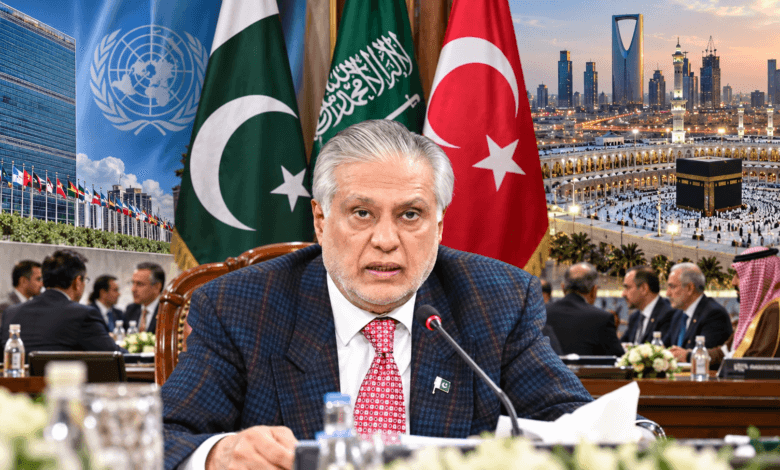
ISLAMABAD: Deputy Prime Minister and Foreign Minister Senator Mohammad Ishaq Dar on Friday outlined Pakistan’s expanding diplomatic and regional security engagements, saying Islamabad remained committed to the defence of Saudi Arabia while Pakistan, Saudi Arabia and Türkiye moved ahead with institutional arrangements under the Makkah Joint Defence Agreement.
Briefing the media on Pakistan’s engagements surrounding the 81st session of the United Nations General Assembly, Dar said Prime Minister Shehbaz Sharif had used his New York visit to present Pakistan’s positions on Palestine, Kashmir, Afghanistan and wider regional security issues.
The Foreign Office had confirmed a day earlier that Dar maintained an extensive schedule during UNGA High-Level Week from September 21 to 25, involving bilateral and multilateral engagements on regional and global issues.
28 Bilateral Meetings Held During UNGA Visit
Dar said Pakistan’s delegation participated in a range of meetings on the sidelines of the General Assembly and held discussions with representatives of numerous countries. He said he held 28 foreign-minister-level bilateral meetings during the visit and participated in multilateral forums, including OIC-related engagements, discussions on artificial intelligence, pandemic preparedness and an informal meeting of the ECO Council of Ministers.
Among the agreements concluded during the New York engagements were arrangements with Guatemala and Benin establishing mechanisms for bilateral political consultations. Pakistan and Guatemala signed an agreement creating an institutional framework for regular political dialogue, while Pakistan and Benin signed a similar memorandum of understanding.
Pakistan and Saudi Arabia also signed an agreement abolishing visa requirements for holders of diplomatic and official/special passports. The agreement was signed by Dar and Saudi Foreign Minister Prince Faisal bin Farhan on the UNGA sidelines.
Pakistan Reaffirms Commitment to Saudi Defence
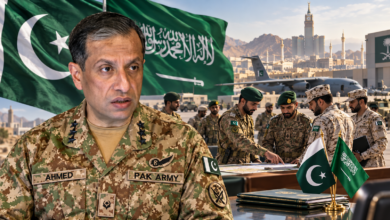
Dar devoted a significant part of his briefing to Pakistan’s defence relationship with Saudi Arabia and the implementation of the Makkah Joint Defence Agreement.
Pakistan, Saudi Arabia and Türkiye signed the Makkah Joint Defence Agreement in Makkah on August 7, 2026. Official statements describe the pact as defensive in nature and stipulate that an armed attack against any one of the three countries will be regarded as an attack against all three, consistent with the right of collective self-defence under Article 51 of the UN Charter.
Dar said Pakistan considered the security of Saudi Arabia and the sanctity of the Two Holy Mosques a matter of fundamental importance, reiterating Islamabad’s commitment to the Kingdom’s defence.
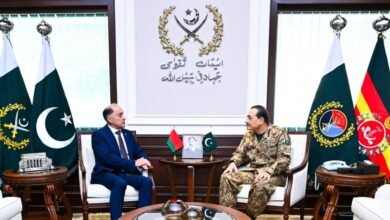
The three countries are now developing the institutional structure required to implement the agreement. Riyadh has been selected as the location of the alliance’s General Secretariat, while Pakistan was allocated the position of Secretary General for the first three-year term.
The Foreign Office formally announced on September 23 that retired Lieutenant General Nauman Mahmood had been appointed as the first Secretary General under the Makkah Joint Defence Agreement and would lead the General Secretariat being established in Riyadh.
Makkah Pact Builds on Pakistan-Saudi Defence Framework
Dar also referred to Pakistan’s earlier bilateral defence framework with Saudi Arabia. Pakistan and Saudi Arabia signed a Strategic Mutual Defence Agreement in September 2025, under which an attack on either country is treated as an attack on both.
The subsequent Makkah agreement expanded the collective-defence framework to include Türkiye alongside Pakistan and Saudi Arabia.
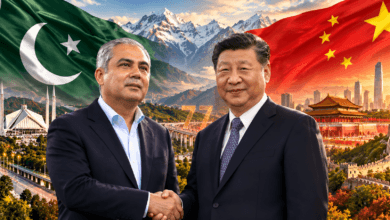
The foreign minister also reviewed Prime Minister Shehbaz Sharif’s UNGA-related engagements. Shehbaz addressed a high-level meeting on China’s Global Development Initiative in New York, reaffirming Pakistan’s support for the initiative and linking it with wider development cooperation and the second phase of CPEC.
Dar said the prime minister also held interactions with leaders from several countries during the visit and presented Pakistan’s position on major regional and international developments.
Pakistan Continues Regional Diplomatic Engagement
The briefing came as Pakistan continues diplomatic activity surrounding the evolving Middle East security environment. Islamabad has previously highlighted its facilitative role in regional de-escalation efforts, including diplomacy involving Iran, the United States and Lebanon. The Foreign Office said in June that Pakistan’s advocacy had contributed to diplomatic efforts surrounding the Lebanon ceasefire, while also stressing that Islamabad favoured dialogue and negotiated settlements.
The Makkah defence framework has meanwhile entered its implementation phase, with military and political coordination among Pakistan, Saudi Arabia and Türkiye continuing after the August agreement. The three countries have publicly characterised the arrangement as a collective defensive mechanism rather than an alliance directed against another state.