IHC Issues Notices Over Islamabad Cricket Stadium
The Islamabad High Court has issued notices to federal authorities, CDA, PCB and environmental regulators over an appeal challenging the proposed international cricket stadium and 175-acre sports development near Sector D-12, citing concerns about wildlife, biodiversity and environmental protection.

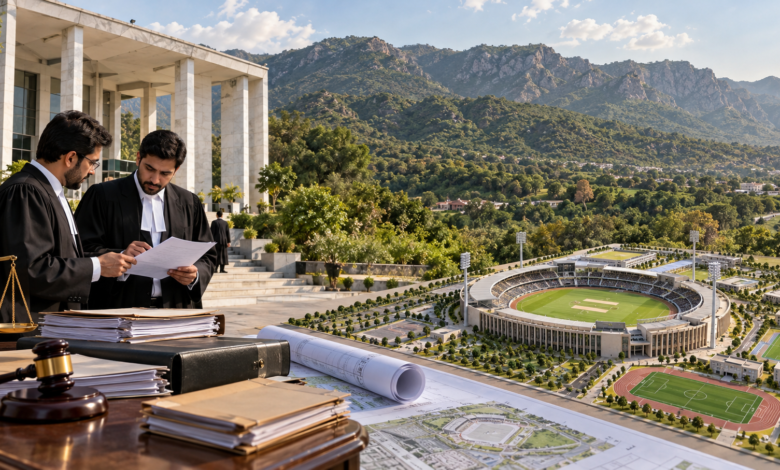
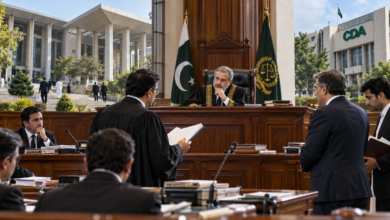
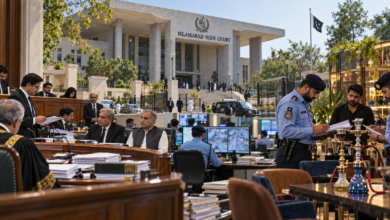
ISLAMABAD, October 12, 2026: The Islamabad High Court (IHC) has issued notices and sought responses from the federal government, Capital Development Authority (CDA), Pakistan Cricket Board (PCB) and other concerned authorities on an intra-court appeal challenging the proposed construction of an international cricket stadium and associated sports facilities in Islamabad.
A division bench comprising Justice Inam Amin Minhas and Justice Shahrukh Arjumand heard the appeal filed by Hameed Nawaz and Muhammad Khurram Javed against a single-bench decision dated September 22, 2026.
The court also sought responses from the Chief Commissioner Islamabad, Ministry of Climate Change and the Chairperson of the Islamabad Wildlife Management Board (IWMB).
Proposed Project Covers 175 Acres Near Margalla Hills
According to the intra-court appeal, the proposed sports development involves land situated in Islamabad’s Zone III, near Sector D-12, including the Shah Allah Ditta area at the foothills of the Margalla Hills.
The appellants stated that land was initially earmarked for the construction of a cricket stadium in Sector D-12. However, the project was subsequently expanded into a larger Olympic Village featuring multiple sporting facilities.
The expanded proposal includes a football ground, hockey stadium and other associated sports facilities.
The appeal maintains that the enlarged development requires substantially more land than initially allocated for the cricket stadium.
Approximately 175 acres have been proposed for the overall sports development, raising concerns among the appellants regarding land use and the environmental consequences of construction in the area.
Appellants Raise Concerns Over Environmental Protection
The appellants argued that the proposed project could adversely affect Islamabad’s natural environment, particularly the ecological characteristics of the Margalla Hills region.
They maintained that the court should examine the potential consequences for natural landscapes, wildlife habitats, biodiversity, ecological systems and the conservation of natural resources before allowing the development to proceed.
According to the appeal, construction on the proposed site would convert existing green areas into developed land, potentially affecting the area’s natural character and ecological balance.
The appellants contended that environmental preservation must remain a central consideration when evaluating major infrastructure projects in environmentally sensitive areas.
They also referred to international legal principles and United Nations instruments, arguing that environmental protection obligations should be considered alongside national laws when reviewing the proposed development.
Appeal Highlights Pakistan’s Protected Wildlife Areas
The petition also referred to Pakistan’s framework for protecting natural habitats and wildlife.
According to figures cited by the appellants, the government has designated 82 wildlife sanctuaries across the country.
The appeal further stated that approximately 954,246 hectares have been protected through 10 national parks, including Margalla Hills National Park.
The appellants relied on these figures to emphasize the importance of preserving legally protected and environmentally significant areas.
They argued that the proposed sports development required careful scrutiny in light of existing conservation policies and the broader objectives of environmental protection.
These environmental concerns form part of the appellants’ submissions and have not been established as judicial findings in the reported proceedings.
Wildlife Board Previously Sought Site Clarification
The proposed cricket stadium near D-12 had already attracted environmental scrutiny earlier in 2026.
In January, the Islamabad Wildlife Management Board sought details from the CDA concerning the precise location and layout of the planned stadium.
The board requested clarification on whether the site fell within, adjoined or overlapped the notified boundaries of Margalla Hills National Park or its protected buffer zone.
CDA officials had maintained that the proposed location was outside the notified national park boundary and fell within Zone III, where recreational activities such as sports facilities are permitted under the applicable land-use framework.
The competing positions highlight the importance of determining the project’s precise geographical boundaries and its compliance with applicable environmental and land-use requirements.
Appellants Seek Reversal of September 22 Decision
In their intra-court appeal, Hameed Nawaz and Muhammad Khurram Javed requested that the Islamabad High Court set aside the single-bench decision issued on September 22, 2026.
They also sought the cancellation of the decision to allocate land for the proposed international cricket stadium.
Additionally, the appellants asked the court to declare the electronic bidding process, procurement proceedings and related administrative arrangements unlawful and set them aside.
Their challenge extends beyond the proposed stadium’s construction to the legal validity of the land allocation and associated project arrangements.
Court Seeks Responses From Relevant Authorities
After hearing the appeal, the division bench issued notices to the relevant federal and institutional respondents, seeking their positions on the objections raised by the appellants.
The proceedings bring the proposed international cricket stadium and broader sports development under further judicial examination, particularly regarding environmental conservation, land use and administrative decision-making.
The issuance of notices represents a procedural step in the appeal and does not itself constitute a ruling invalidating the project or its bidding arrangements.
The substantive questions raised by the appellants remain subject to further consideration by the court.