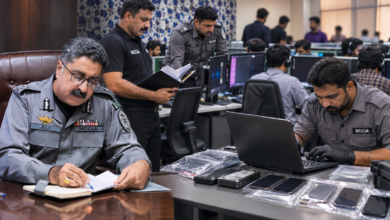
NCCIA Plans 6,000 Recruitments and 150 Cyber Police Stations
Federal government plans to expand cyber police stations from 16 to 150 within nine months as NCCIA faces a backlog of over 324,000 cases, acute staffing shortages and a 77 per cent budget shortfall.

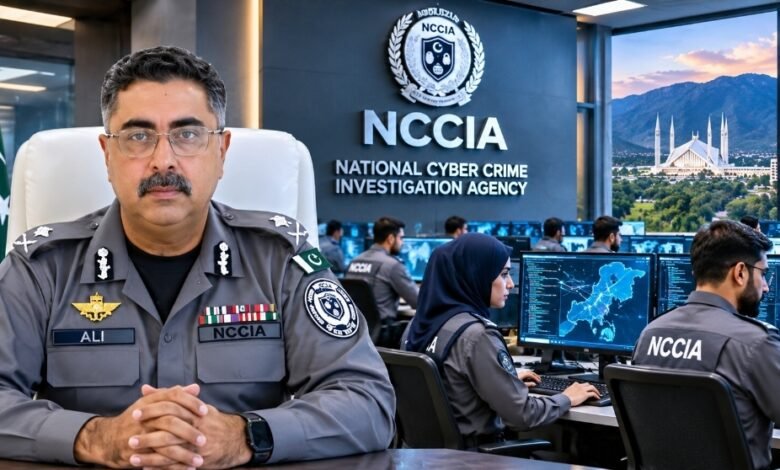
ISLAMABAD: The federal government is considering a major expansion of Pakistan’s cyber policing infrastructure, with a proposal to recruit 6,000 specialised personnel, described as “Cyberspace Defenders”, and establish a nationwide network of 150 cyber police stations within nine months.
The proposed expansion forms part of a comprehensive restructuring plan presented by the National Cyber Crime Investigation Agency (NCCIA) to Prime Minister Shehbaz Sharif in Islamabad.
The prime minister, during a high-level meeting on November 25, directed the agency to modernise its investigative capabilities, recruit information technology and artificial intelligence experts on merit, and expedite the disposal of pending cases.
The restructuring proposal also envisages transforming the NCCIA into a national-level Pakistan Cyber Police, equipped with specialised investigators, technical experts, modern digital forensic facilities and an expanded operational network.
Over 324,000 Cases Await Resolution
According to the briefing, Pakistan currently has only 16 cyber police stations serving approximately 250 million people across 173 districts.
The agency faces a backlog of 324,404 cases, while First Information Reports (FIRs) have reportedly not been registered in approximately 80 per cent of complaints.
The briefing further revealed that nearly 70 per cent of complaints received during conventional police open courts relate to cybercrime, placing additional pressure on the already overstretched federal investigation agency.
The NCCIA currently operates with a total workforce of just 503 personnel, including 226 investigation officers serving on deputation.
Recruitment of 6,000 Cyberspace Defenders
Under the proposed restructuring framework, the agency would recruit 6,000 personnel across four major professional categories.
The proposed recruitment includes:
- 3,500 investigation officers
- 1,000 SWAT and Red Team personnel
- 1,000 information technology specialists
- 500 young detectives from leading educational institutions, including NUST and LUMS
The recruitment of graduates from leading universities is intended to strengthen the agency’s technical expertise and introduce specialised skills in digital investigations, cybersecurity and emerging technologies.
The proposed expansion would increase the agency’s workforce substantially, addressing its dependence on officers serving on deputation from other departments.
150 Cyber Police Stations Across Pakistan
The nine-month restructuring plan proposes expanding the existing network of 16 cyber police stations to 150 facilities nationwide.
According to the proposed geographical distribution:
- Punjab: 46 cyber police stations
- Khyber Pakhtunkhwa: 36 cyber police stations
- Sindh: 31 cyber police stations
- Balochistan: 22 cyber police stations
- Islamabad, Rawalpindi and Gilgit-Baltistan: 15 cyber police stations collectively
The proposed expansion holds particular significance for Islamabad and Rawalpindi, where the growing use of digital financial services, online businesses and technology platforms has increased the need for accessible digital investigation services.
However, the individual allocation of stations for Islamabad, Rawalpindi and Gilgit-Baltistan has yet to be disclosed.
Thousands of Cases Per Investigation Officer
The briefing highlighted substantial disparities between the population served by the NCCIA and the number of investigation officers available.
Punjab, with an estimated population of 140 million, currently has only 61 officers available to investigate cybercrime cases.
In Lahore, each investigation officer is reportedly handling an average of 3,441 pending cases, while the corresponding figure in Multan stands at 4,672 cases per officer.
The figures illustrate the considerable operational burden facing the agency and the challenges associated with conducting timely investigations, examining digital evidence and completing legal proceedings.
NCCIA Pays Over Rs38 Million in Monthly Rent
The briefing also highlighted serious infrastructure and administrative challenges confronting the federal agency.
According to the documents, the NCCIA does not possess dedicated buildings of its own for its operations and spends more than Rs38.2 million every month on rented premises.
At the reported monthly rate, the agency’s annual rental expenditure exceeds Rs458 million.
The briefing further disclosed that licences for several essential technological systems, including network security infrastructure, Intrusion Prevention Systems (IPS), Security Information and Event Management (SIEM) platforms and digital forensic tools, had expired.
Significant salary disparities were also identified, with differences of up to 46 per cent between the remuneration of NCCIA officers and their counterparts in Punjab Police.
Agency Faces 77 Per Cent Budget Shortfall
Financial constraints remain another major obstacle to the proposed institutional reforms.
For the financial year 2026–27, the NCCIA reportedly required Rs5.68 billion against an allocation of only Rs1.31 billion.
The difference amounts to approximately Rs4.37 billion, representing a funding shortfall of nearly 77 per cent.
Prime Minister Forms High-Level Committee
Prime Minister Shehbaz Sharif has constituted a ministerial committee to examine the restructuring recommendations submitted by the NCCIA.
The committee comprises Federal Interior Minister Mohsin Naqvi, Law Minister Azam Nazeer Tarar, Finance Minister Muhammad Aurangzeb and Minister for Information Technology and Telecommunication Shaza Fatima Khawaja.
The committee was directed to submit its recommendations to the prime minister by the end of the week.
The NCCIA currently functions under the Ministry of Interior and Narcotics Control and investigates offences under the Prevention of Electronic Crimes Act (PECA), 2016, as amended.