SUPARCO Names Pakistan’s First Lunar Rover ‘Jinnah-1’
The name honours Quaid-e-Azam Muhammad Ali Jinnah and was selected following a nationwide naming competition, as Pakistan prepares its indigenous rover for China’s Chang’e-8 lunar mission.

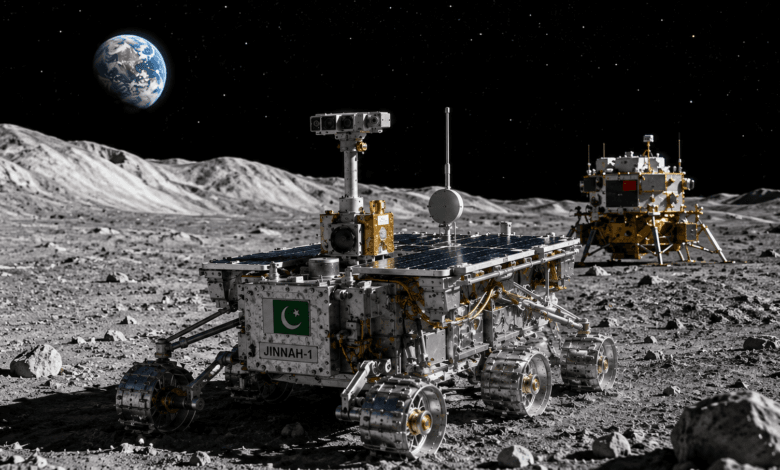
ISLAMABAD: Pakistan’s national space agency, SUPARCO, has announced “Jinnah-1” as the official name of Pakistan’s first indigenous lunar rover, marking another symbolic milestone in the country’s expanding space programme.
According to details shared by SUPARCO, the name was selected from more than 4,000 suggestions submitted through a nationwide competition. Seven participants reportedly proposed “Jinnah-1”, with 17-year-old Tayyab Karim from Bahawalnagar ultimately selected as the winner through a draw.
SUPARCO said the name pays tribute to Pakistan’s founder, Quaid-e-Azam Muhammad Ali Jinnah, while representing the country’s aspirations for scientific advancement, technological development and exploration of new frontiers.
Rover to Participate in Chang’e-8 Mission
The rover is being developed for participation in China’s Chang’e-8 mission. SUPARCO’s official Lunar Rover Program page currently lists the mission’s launch year as 2028 and says the approximately 35-kilogram indigenous rover is expected to explore the lunar south pole.
The lunar south pole is regarded as an important area for future exploration because of its scientific value and relevance to longer-term plans for sustained human activity on the Moon.
According to SUPARCO’s published mission information, the rover will contribute to scientific exploration of the lunar surface, including studies of lunar soil, surface mapping and testing technologies relevant to future lunar and planetary exploration. The programme forms part of Pakistan’s cooperation with China and its involvement in the broader International Lunar Research Station (ILRS) initiative.
The naming of Jinnah-1 follows Pakistan’s growing participation in lunar exploration programmes and gives the country’s first indigenous lunar rover a national identity ahead of its planned journey to the Moon.