Monsoon Exposes Rawalpindi’s Drainage Challenge Despite Rs15bn Upgrade
Heavy rainfall inundated roads and low-lying neighbourhoods across Rawalpindi on Wednesday, putting renewed scrutiny on the city’s drainage capacity months after officials said a Rs15 billion sewerage overhaul — including 82 kilometres of new lines — was being undertaken ahead of the monsoon.

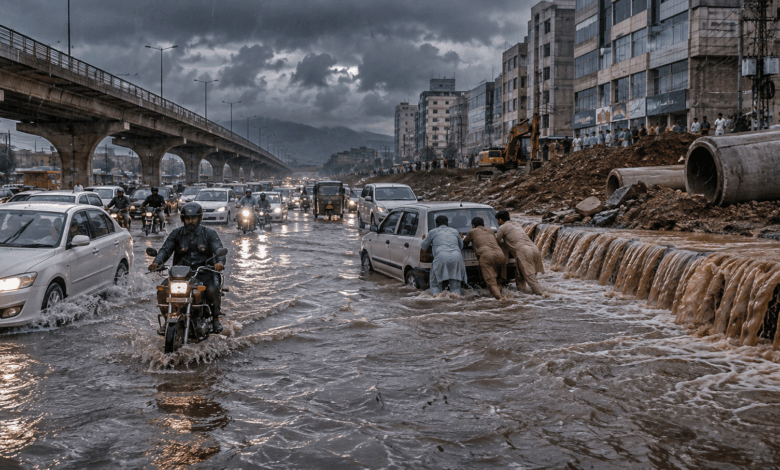
RAWALPINDI, August 19: Heavy monsoon rainfall inundated roads and low-lying neighbourhoods across Rawalpindi on Wednesday, disrupting normal life and bringing renewed attention to the effectiveness and readiness of the city’s drainage infrastructure.
Several Areas Hit by Urban Flooding
Reports from Rawalpindi said rainwater entered several localities while drains overflowed in Jan Colony, Shalay Valley, People’s Colony and Raja Ikram Colony.
Water also accumulated on roads in Sadiqabad and Muslim Town as the Water and Sanitation Agency (WASA) remained on high alert for urban flooding.
The situation became particularly serious as the water level in Nullah Lai rose sharply.
Flood-warning sirens were sounded as authorities urged residents of vulnerable areas to remain cautious. Later, as rainfall temporarily eased, water levels in the nullah began falling.
Rs15 Billion Sewerage Project Under Scrutiny
The latest flooding is significant because Rawalpindi has been undergoing a major sewerage infrastructure overhaul.
In March, officials said the Punjab government had launched a Rs15 billion project under the Chief Minister’s Development Programme to upgrade Rawalpindi’s sewerage system.
The project included approximately 82 kilometres of new sewerage lines, construction of a two-kilometre drainage channel for rainwater disposal and establishment of a 16-cusec disposal station.
At the time, officials said the development works were targeted for completion by the end of June 2026, ahead of the monsoon season.
Wednesday’s widespread waterlogging therefore raises legitimate questions about how much of the planned infrastructure has actually been completed, which neighbourhoods are currently benefiting from it and whether the upgraded network has sufficient capacity to cope with intense monsoon rainfall.
Flooding Does Not Establish Project Failure
It does not, by itself, establish that the Rs15 billion project has failed.
The scale and distribution of rainfall, the completion status of individual components, drainage maintenance, encroachments, solid-waste blockages and the capacity of older sections of the network would all have to be examined before responsibility could be determined.
Heavy Rainfall Raises Flood Risk
The rainfall itself was unusually intense.
Reports citing Punjab’s disaster-management authorities said Rawalpindi recorded around 130mm of rainfall, while rising water in Nullah Lai prompted flood warnings.
The Pakistan Meteorological Department has also warned that further heavy rainfall could cause flash flooding in low-lying areas, particularly along Nullah Lai and other local drains.
Questions Over Infrastructure Readiness
With substantial public money committed to improving Rawalpindi’s sewerage and drainage network, the latest spell provides an important test of those investments.
Public disclosure of the Rs15 billion project’s current completion status, operational components and performance during the latest rainfall could help establish whether Wednesday’s flooding resulted primarily from exceptional rainfall, unfinished infrastructure, capacity limitations or other shortcomings.
For residents facing flooded streets and neighbourhoods, that distinction is crucial — and requires evidence rather than political claims.
The Rs15 billion figure and scope are independently supported by March reporting and APP’s account of the official project briefing. Officials specifically described 82km of sewerage lines, a 2km drainage channel and a 16-cusec disposal station, with June 2026 given as the completion target.
Today’s flooding is also independently documented: reports describe overflowing drains and water entering several Rawalpindi localities, while Nullah Lai rose sufficiently for authorities to sound warning sirens.