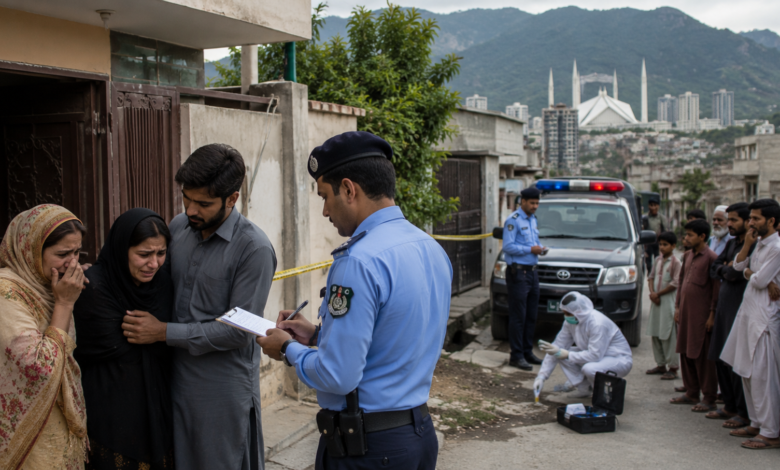
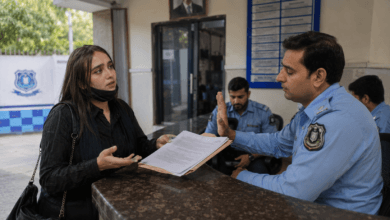
Safe Migration Drive Gains Urgency as Visa Fraud Cases Surface in Islamabad
IOM-backed skills and career guidance initiatives are encouraging Pakistanis to pursue verified, regular pathways to overseas employment, as a series of recent FIA Islamabad Zone cases involving alleged visa fraud, questionable travel documents and irregular migration highlights the risks facing prospective migrants.

ISLAMABAD: Pakistan’s effort to steer prospective overseas workers towards skills-based and regular migration is gaining significance as a series of recent cases reported by the Federal Investigation Agency’s Islamabad Zone highlights how jobseekers can become exposed to alleged visa fraud, questionable documentation and irregular migration channels.
The emerging policy direction combines two approaches: expanding access to skills, career counselling and legitimate overseas employment pathways on one side, and stronger enforcement against suspected fraudulent agents, facilitators and irregular travel arrangements on the other.
The International Organization for Migration (IOM) Pakistan has recently been promoting skill-based migration, encouraging Pakistanis seeking employment overseas to understand legitimate pathways, prepare appropriate documentation and obtain reliable information before travelling.
Its messaging stresses that prospective migrants should be cautious about irregular routes, unverified employment offers and misleading promises, while understanding their rights and responsibilities before making decisions about overseas employment.
TVET Programme Promotes Safer Migration
The initiative forms part of the Technical and Vocational Education and Training (TVET) Sector Support Programme in Pakistan, supported by the European Union and the Federal Republic of Germany. The wider programme seeks to connect skills development with decent employment and safer migration opportunities.
Recent IOM activities have included career counselling for potential and returning migrants, covering skills development, entrepreneurship, employability and regular migration options. The approach reflects a broader effort to ensure that Pakistani workers are better equipped to match their qualifications with international labour-market requirements rather than becoming dependent on informal intermediaries.
That approach is also consistent with the wider UN emphasis in Pakistan on fair recruitment, worker protection, skills development and safe migration.
FIA Cases Highlight Visa Fraud Risks
The urgency of that message is illustrated by several cases recently reported by FIA Islamabad Zone.
In one case, FIA’s Anti-Human Trafficking Circle Rawalpindi said it arrested a suspect after two complainants allegedly paid a combined Rs1.2 million for Polish work visas that were not provided. FIA said a case was registered under Sections 18 and 22 of the Emigration Ordinance, 1979, while efforts were continuing to apprehend another nominated suspect.
In a separate Islamabad case, FIA said a suspect was arrested for allegedly receiving Rs6 million from a complainant after promising to arrange travel to Canada. According to the agency, the case was registered under the Emigration Ordinance and relevant provisions of the Pakistan Penal Code, and further investigation is continuing.
Another complaint involving promised Hong Kong work visas resulted in the recovery of Rs4.1 million, according to FIA Islamabad Zone. The agency said the complainant alleged that an agent had received the money in 2022 for arranging work visas for him and his relatives but had neither provided the promised visas nor initially returned the funds. FIA said the full amount was subsequently returned during the inquiry and a settlement was documented between the parties.
FIA Steps Up Airport Checks
Recent enforcement has also extended to Islamabad International Airport.
FIA said 10 people arriving at the airport after being deported from Türkiye, Italy, Kuwait and Saudi Arabia on August 22 were booked under the Passport Act. According to the agency, six had been deported from Türkiye over allegations connected with attempts to travel irregularly towards Europe, while cases involving the other returnees included allegations relating to immigration violations and overstays. FIA said investigators would examine whether agents or facilitators had played a role.
In another airport case, FIA said a passenger travelling towards Saudi Arabia was stopped on August 14 after secondary profiling allegedly identified a questionable Netherlands visa in his passport. The passenger was referred to the Anti-Human Trafficking Circle Islamabad for further investigation, including examination of possible facilitation by others.
FIA separately reported that a passenger returning after deportation from Brazil was booked after investigators raised questions over a Mexican visa found in his passport. The agency said the investigation would seek to identify any other individuals allegedly involved in arranging the documentation or travel.
Another passenger travelling from Islamabad to Saudi Arabia was stopped on August 8 after FIA said secondary screening indicated that the Saudi tourist visa had allegedly been obtained using an invalid US permanent residence document. According to FIA, the passenger told investigators that he had paid an agent Rs220,000.
Action Extends to Overseas Employment Processing
Beyond individual travellers and private agents, FIA has also reported action over alleged irregularities involving the Protectorate of Emigrants office in Rawalpindi. The agency said three private agents and two government employees were arrested during an anti-corruption investigation concerning payments allegedly collected from people seeking overseas work-related processing. The allegations remain subject to investigation and judicial determination.
Need for Preventive Measures
Taken together, the cases demonstrate why migration governance cannot depend solely on enforcement at airports or action after prospective workers have already lost money.
Preventive measures including recognised skills, reliable information, verification of employment opportunities, understanding destination-country requirements and access to legitimate recruitment channels can reduce prospective migrants’ vulnerability to deceptive offers.
FIA itself describes human trafficking and migrant smuggling as transnational crimes requiring coordinated responses. Its Anti-Human Trafficking and Smuggling Wing oversees inquiries, investigations and prosecutions and coordinates with domestic and international organisations, including IOM and UNODC.
The agency also uses the Integrated Border Management System at immigration checkpoints, screening, document examination and other mechanisms to identify questionable travel arrangements.
15,200 People Reached Through TVET Programme
The skills-based approach seeks to intervene earlier in the migration process.
The TVET Sector Support Programme says more than 15,000 returnees, prospective migrants and members of disadvantaged groups have benefited from its interventions, while government officials have also received training in skills-based migration management.
For Pakistani jobseekers, the underlying message is increasingly clear: overseas employment should begin with skills, verified information and recognised migration channels rather than promises of shortcuts.
As demand for international employment remains strong, coordination between skills institutions, migration authorities, law-enforcement agencies and international partners could determine whether prospective workers enter the global labour market through safer, documented channels or remain vulnerable to fraudulent intermediaries and irregular routes.
The recent FIA cases are allegations and enforcement actions at various stages of investigation. Arrest, booking, offloading or investigation does not by itself establish guilt, and any accused person is entitled to due process and the presumption of innocence until determined otherwise by a competent court.
Additional Programme Context
A useful piece of context for the story is that the TVET programme reports 15,200 returnees, prospective migrants and disadvantaged people reached, while 100 participants from the Ministry of Overseas Pakistanis and NAVTTC received training on skills-based migration management. IOM’s current messaging also explicitly links skills recognition and career counselling with safer overseas employment pathways.