
Pakistan, Google Sign Major Deal for 150,000 Certificates, Free AI Access for Students
150,000 professional certificates, free AI access for students and an Islamabad AI Centre planned as Pakistan targets a $30 billion digital economy by 2030.

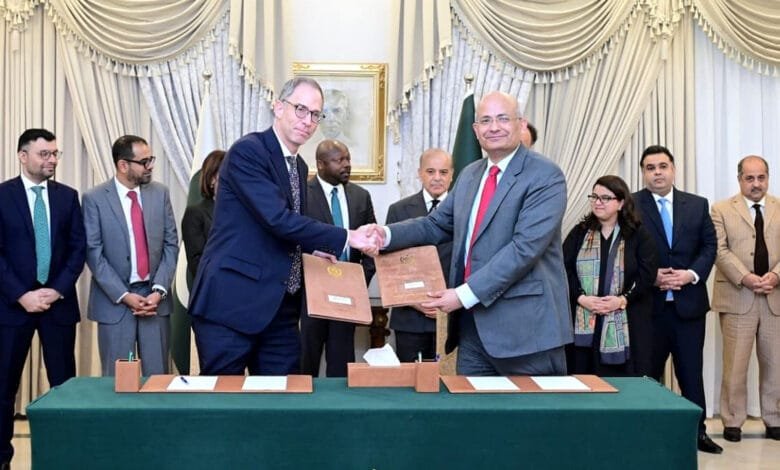
ISLAMABAD, August 21: Pakistan and Google have signed a memorandum of understanding aimed at expanding cooperation in artificial intelligence, digital skills, technology, education and innovation, as Islamabad seeks to accelerate the growth of its digital economy and increase technology exports.
The agreement was signed during a reception hosted by Prime Minister Shehbaz Sharif at the Prime Minister’s House for Google’s senior leadership. The partnership includes expanded professional training, access to artificial intelligence tools for students and plans for a dedicated AI Centre of Excellence in Islamabad.
150,000 Professional Certificates Planned
Under the agreement, Google will expand its professional certificate programme in Pakistan, with a target of providing 150,000 certificates to Pakistani youth during 2026.
The programme is expected to focus on skills relevant to the evolving technology sector and could provide young Pakistanis with additional pathways into employment and internationally oriented digital work.
The two sides have also agreed to provide Pakistani students with one year of free access to advanced AI tools, including Google AI Plus and Gemini.
A proposed AI Centre of Excellence in Islamabad will further focus on training young people and developing skills aligned with the requirements of the global technology market.
Deal Comes as IT Exports Reach New Highs
The agreement comes as Pakistan’s technology sector is recording strong export growth.
Official data showed that IT exports increased 18% year-on-year to $417 million in July 2026, the first month of the new fiscal year.
That follows a record performance in FY2025-26, when IT exports reached $4.6 billion, compared with approximately $3.8 billion a year earlier.
Technology and digital services were the largest component of Pakistan’s overall services exports, which stood at $10.02 billion during the same financial year.
The figures underline the growing economic importance of Pakistan’s software, IT-enabled services and digital workforce and provide a backdrop to the government’s push for deeper engagement with major global technology companies.
Google’s Pakistan Footprint Is Expanding
The agreement also builds on Google’s growing physical and commercial presence in Pakistan.
The company recently opened its Islamabad office, with Fasieh Mehta as the first head of its Pakistan mission, giving it a formal on-ground presence from which it can engage more closely with government institutions, businesses, universities and technology stakeholders.
Google has also supported Chromebook manufacturing in Haripur, extending its involvement beyond digital services and training into hardware production and local technology supply chains.
AI to Be Used in Government and Agriculture
The new partnership extends beyond training and employment.
Google will work with the Pakistani government on the use of AI to improve public services and make government operations more efficient. The cooperation also includes the use of AI-powered data analysis as part of the Federal Board of Revenue’s digital transformation efforts.
Agriculture is another area identified for cooperation. The technology could be explored for crop monitoring, production forecasting and more sustainable farming practices, potentially helping authorities and farmers make better use of agricultural data.
The agreement also covers support for Pakistan’s mobile-app developers and gaming industry, alongside efforts to strengthen digital payments and e-commerce.
Small and medium-sized businesses are expected to benefit from digital platforms designed to help them reach international customers and markets.
Joint Task Force to Target Export Barriers
A joint task force involving government representatives, Google and industry stakeholders will oversee implementation of the cooperation framework.
Its responsibilities will include identifying obstacles to IT exports, examining new areas of growth and developing strategies to improve Pakistan’s position in the international technology market.
The initiative forms part of the government’s broader ambition to expand the country’s digital economy to $30 billion by 2030.
Achieving that target, however, will depend not only on training more workers but also on creating the conditions for skilled Pakistanis and technology companies to generate higher-value exports, attract investment and compete internationally.
Digital Safety Initiative Adds Another Dimension
Google’s engagement has also expanded into online safety.
The company recently announced a $500,000 investment in the “Digital Pasban” initiative, which aims to provide 200,000 Pakistani households with Urdu-language digital safety guidance and training for parents.
The initiative reflects growing concerns around the safe use of digital platforms as internet access expands across the country.
For Pakistan, the significance of the latest agreement will ultimately depend on implementation. The country already has a large pool of young people and a rapidly expanding digital services sector. Turning that potential into sustained export growth will require industry-ready skills, reliable digital infrastructure, investment and stronger links between Pakistani businesses and global markets.
The agreement with Google provides another channel for that effort, while the sharp rise in IT exports suggests that Pakistan’s technology sector is already becoming an increasingly important part of the country’s economy.




Incredible Sir Be blessed forever.