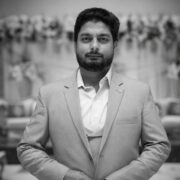
Who is Capt. (R) Muhammad Sohail Chaudhry, Islamabad’s new police chief?
A former Pakistan Army captain with a reputation for hard-edged field policing has been handed command of the federal capital's force.

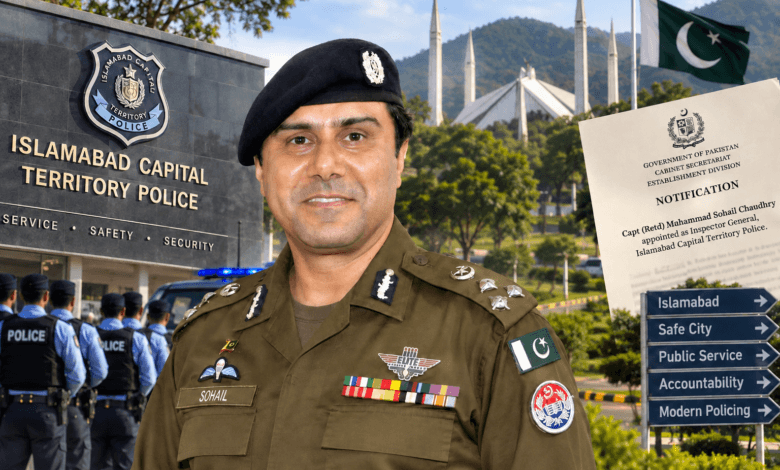
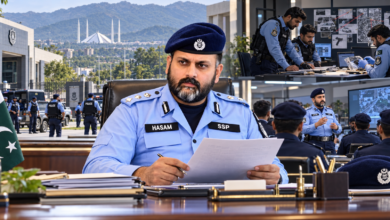
ISLAMABAD: The federal government on Saturday appointed Captain (Retired) Muhammad Sohail Chaudhry as Inspector General of the Islamabad Capital Territory Police, installing one of Punjab’s most experienced field commanders at the head of the capital’s force in a reshuffle that also reshaped the country’s cybercrime and police reform bodies.
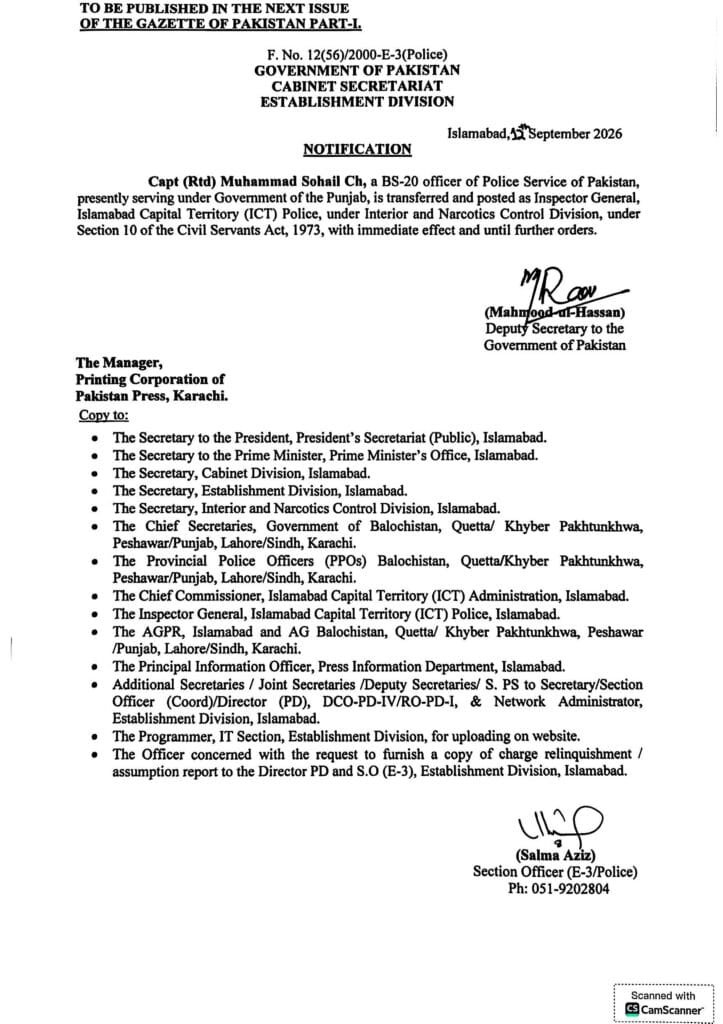
The Establishment Division notification describes Capt (Rtd) Muhammad Sohail Ch as a BS-20 officer of the Police Service of Pakistan serving under the Government of Punjab, transferred and posted as Inspector General, ICT Police. The appointment has been made under Section 10 of the Civil Servants Act, 1973, takes effect immediately and remains in force until further orders. The order, issued by the Cabinet Secretariat, is to be published in the next issue of the Gazette of Pakistan, Part-I.
He succeeds Syed Ali Nasir Rizvi, who had led the capital police since late March 2024 and has been appointed Director General of the National Cyber Crime Investigation Agency. A separate notification named Syed Khurram Ali, previously awaiting posting at the Establishment Division, as Director General of the National Police Bureau.
The change had been anticipated for several days in police and administrative circles after the Prime Minister called both the outgoing capital police chief and the then Commandant of the Police Training College Lahore to his office.
A Soldier Turned Policeman
Sohail Chaudhry belongs to the 28th Common Training Programme of the Police Service of Pakistan, the batch trained at the Civil Services Academy, Lahore, whose officers now occupy much of the senior command across the country. His batch includes Muhammad Ahsan Younas, himself a former Inspector General of Islamabad Police, along with Muhammad Azhar Akram, Muhammad Kashif Mushtaq Kanjoo and Khurram Shahzad Haider Warraich.
He came to the police service from the Pakistan Army, where he served as a commissioned officer and retired in the rank of captain. The military prefix has travelled with him through every posting since, and officers who have worked under him say it shows in the way he runs a command: early morning inspections, an intolerance for absenteeism, and a preference for being physically present at incident scenes rather than receiving reports about them.
That background also places him in a small but recognisable group within the PSP army officers who took the competitive examination and moved across into civilian law enforcement, bringing with them a drill-floor approach to discipline that has made them both admired and resented inside the force.
Twenty-Six Years Across Punjab
Chaudhry’s service record reads as a tour of Punjab’s most demanding operational seats.
He first drew wide public notice as Chief Traffic Officer, Lahore, around 2014, a post from which he was moved during a controversy over traffic management surrounding the opening of a city flyover.
In late 2019 he was appointed DIG Counter Terrorism Department, Punjab, and shortly afterwards swapped posts with Muhammad Azhar Akram to take charge as City Police Officer, Faisalabad a mutual transfer between two officers of the same batch. His roughly two years in Faisalabad were the making of his public reputation. A sustained drive against organised criminal groups and street crime in the industrial city earned him a following in the local press and the informal label that has followed him since: a dabbang officer.
In August 2021 he was brought to Lahore as DIG Operations in the immediate aftermath of the Minar-e-Pakistan harassment case, in which the Lahore police failed to respond to emergency calls from a woman assaulted by a crowd at Greater Iqbal Park on Independence Day. The incident triggered one of the largest accountability sweeps in the city’s recent policing history: the serving DIG Operations was removed, along with the SSP Operations, the SP City Operations, and the DSP and station house officer concerned. Chaudhry was the officer chosen to rebuild operational credibility in the provincial capital.
He held the Lahore operations command for a year. On 31 July 2022 he was moved to the Counter Terrorism Department as DIG, a posting that lasted a single day before his services were surrendered to the federal government. He then spent roughly six months out of the field before returning as Regional Police Officer, Multan in January 2023, in a reshuffle that changed the regional police officer in every range of the province.
Multan proved his longest and steadiest tenure. For three years he oversaw policing across Multan and the neighbouring districts of Vehari, Khanewal and Lodhran, a region that combines dense urban crime with the particular challenges of riverine and canal-belt policing. During this period he worked closely with military formations stationed in the area on flood response and internal security coordination, and pushed an aggressive public-facing communications operation built around open courts and direct complaint redressal.
In February 2026, under a large reshuffle ordered by the newly appointed Inspector General of Punjab, Abdul Karim, he was posted as Commandant, Police Training College, Lahore, the province’s principal institution for recruit and in-service training. It is from this post that he now moves to Islamabad.
What Awaits Him in the Capital
Chaudhry inherits a force in the middle of a substantial technological overhaul. The Islamabad Police have been rolling out an artificial-intelligence-enabled command and control system intended to strengthen real-time monitoring, incident detection and response times across the capital, a programme that will now be his to complete and, eventually, to defend.
The operational challenges are the ones that have defined the post for a decade. Islamabad is simultaneously a compact city of roughly two million people and the staging ground for every national protest, long march and sit-in; it hosts the diplomatic enclave, the parliament, the judiciary and the entire federal secretariat. Its police chief answers to the Interior Division while working within sight of every political actor in the country. Street crime, vehicle theft, organised begging networks, and the policing of the capital’s rapidly expanding peripheral sectors sit alongside high-grade counterterrorism and VIP security duties.
The post has also become one of the shortest-tenured senior appointments in Pakistani policing. Chaudhry is at least the sixth officer to hold it in six years.
His immediate priorities, according to officials familiar with the transition, are expected to centre on street crime in the capital’s residential sectors, traffic enforcement, and internal accountability within the force the three areas he has emphasised in every previous command.
The Wider Reshuffle
The changes announced on Friday and Saturday touch three institutions at once.
National Cyber Crime Investigation Agency: Ali Nasir Rizvi moves from the capital’s police command to head the country’s specialised cybercrime body, at a point when digital fraud, online harassment and technology-enabled financial crime have become among the fastest-growing categories of complaint in Pakistan. Rizvi brings two and a half years of experience running the capital’s police, including its investigation and cyber units.
National Police Bureau: Syed Khurram Ali, a BS-21 officer of the Police Service of Pakistan, takes charge as Director General. The bureau functions as the federal government’s police research, standards and coordination arm, and has carried much of the technical work behind national policing reform proposals.
Islamabad Capital Territory Police: Chaudhry assumes charge with immediate effect.