NCCIA Raids G-10 Call Centre, 220 Held, Including 17 Chinese
Newly appointed CCRC Islamabad SHO Shafqat Faiz leads operation as cybercrime agency widens nationwide crackdown on illegal call centres and online financial fraud networks

ISLAMABAD: The National Cyber Crime Investigation Agency (NCCIA) on Tuesday carried out a major operation against a suspected illegal call centre in Islamabad’s G-10 Markaz, taking around 220 people, including 17 Chinese nationals, into custody as part of an intensified crackdown on organised cybercrime and online financial fraud.
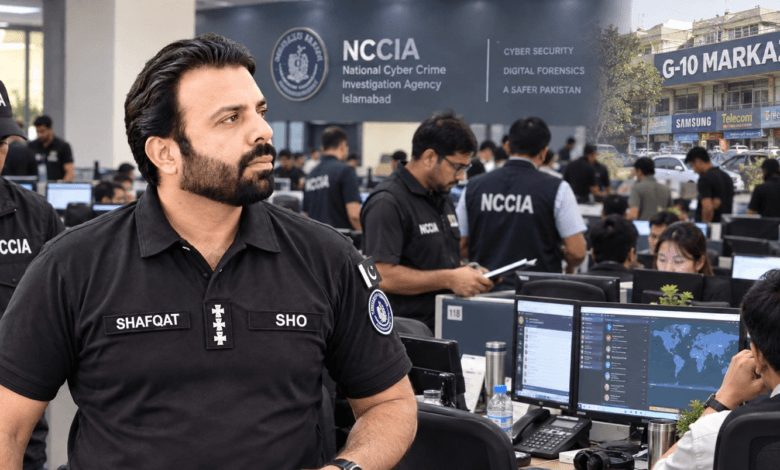
The operation was led by newly appointed SHO Cyber Crime Reporting Centre (CCRC) Islamabad Shafqat Faiz, according to information available with Islamabad Tribune.
Faiz was recently appointed SHO NCCIA Islamabad after 53 officers and personnel of Islamabad Police were deployed to the cybercrime agency on deputation as part of a manpower and operational restructuring.
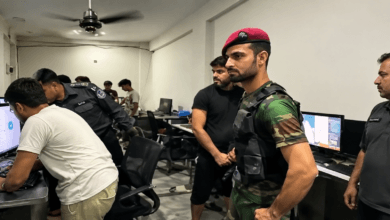
NCCIA teams moved into the G-10 premises and took the people present at the facility into custody while investigators began examining computers, mobile phones, communication systems and other digital material.
The operation comes less than a week after newly appointed NCCIA Director General Syed Ali Nasir Rizvi ordered a nationwide crackdown on illegal call centres, online financial scams and other forms of cybercrime during a high-level meeting of the agency’s senior officers in Islamabad.
Call Centres Under Growing Scrutiny
The latest raid is part of a wider campaign targeting call centres suspected of being used as fronts for cyber-enabled financial fraud, identity theft, impersonation, phishing and other online schemes.
Pakistan has witnessed a series of major operations against such centres over the past year, with Islamabad becoming one of the principal areas of enforcement activity.
Last month, the NCCIA raided another suspected foreign-operated call centre in Islamabad’s G-8 sector. Electronic devices recovered during that operation were sent for forensic examination as investigators attempted to establish the nature and extent of its activities.
An even larger operation was conducted in Islamabad’s I-10 sector in August, where hundreds of foreign nationals were detained in joint action by the FIA and NCCIA.
According to NCCIA, foreign nationals found at the I-10 facility included Chinese citizens and nationals of several other countries. Separate proceedings were initiated under the Foreigners Act and the Prevention of Electronic Crimes Act.
Another major operation at Sparco Plaza in Gulberg Greens earlier in August resulted in the detention of more than 370 foreign nationals in separate FIA and NCCIA actions.
The FIA booked 258 foreigners over alleged activities contrary to the conditions of their visas, while the NCCIA detained another 114 foreign nationals, including 111 Chinese and three Vietnamese citizens, in connection with alleged online activities.
Why Some Foreign Nationals Were Deported
The continuing crackdown has also led to deportation proceedings against foreign nationals found to be working or carrying out commercial activities outside the conditions under which they entered Pakistan.
On August 30, the FIA deported another 20 Chinese nationals who had earlier been detained in connection with an Islamabad call-centre case. Their names were also placed on the blacklist.
According to information available at the time, authorities alleged that the individuals had violated the conditions of their visas by engaging in activities beyond the permitted scope of their stay.
In previous operations, authorities said several foreign nationals had entered Pakistan on visit or business visas before allegedly becoming involved in call-centre operations.
The ongoing investigations have therefore developed on two parallel tracks: cybercrime cases handled by the NCCIA and immigration or visa-related proceedings handled by the FIA.
How the Scams Work
Investigations conducted across Pakistan show that the term “illegal call centre” can cover sophisticated operations extending far beyond conventional telephone fraud.
Some centres allegedly operate through specialised calling software that allows callers to disguise their real telephone numbers.
Known as caller-ID spoofing, the technique can make a call appear to originate from a bank, financial institution or another trusted organisation.
In a Karachi operation last month, the NCCIA said investigators recovered spoofing diallers and software along with confidential banking information relating to foreign nationals.
According to the agency, callers allegedly impersonated representatives of US banks and debt-resolution companies to obtain Social Security numbers, dates of birth, telephone numbers, bank details and credit-card credentials from potential victims.
The information was allegedly passed to other members of the network for unauthorised financial transactions.
Other networks rely more heavily on social media.
Potential victims can be approached through Facebook, WhatsApp, Telegram or other platforms and offered investment opportunities, online jobs, e-commerce work or easy ways of earning money.
The initial contact may involve a small task or investment. Victims may then be shown apparently successful returns through a digital account or website and encouraged to deposit larger amounts.
When they attempt to withdraw the supposed profit, additional payments can be demanded under various pretexts.
From Spoofing to Online Investment Schemes
The methods uncovered by investigators indicate that suspected call-centre networks often divide their operations among different teams.
One group may be responsible for identifying and approaching potential targets, while another handles telephone conversations or online chats.
Technical staff can manage websites, telephone systems and online profiles, while financial handlers move funds through bank accounts, payment services or virtual assets.
This structure allows a large operation to function from a conventional office equipped with rows of computers, mobile phones and headsets while potentially reaching victims thousands of kilometres away.
The increasing use of artificial intelligence, fabricated online identities and encrypted communication platforms has added another layer of sophistication to such networks.
Operation Grey and Nationwide Crackdown
Pakistan’s campaign against illegal call centres gathered pace following the launch of Operation Grey, an NCCIA initiative targeting unauthorised foreign-linked call-centre operations.
The agency initially identified dozens of suspected centres in different parts of the country, focusing on networks allegedly engaged in financial fraud, unauthorised international calling and other online activities.
The campaign has since expanded into a broader nationwide enforcement drive.
The latest push follows the appointment of Syed Ali Nasir Rizvi as NCCIA director general earlier this month. Rizvi, who previously served as Inspector General of Islamabad Police, formally assumed charge after the federal government approved his appointment under the amended Prevention of Electronic Crimes Act.
Soon after taking charge, he directed NCCIA officers across the country to intensify action against illegal call centres and online financial scams.
The Islamabad Cyber Crime Reporting Centre has also been strengthened through the deployment of Islamabad Police personnel, including six inspectors and 23 sub-inspectors. Shafqat Faiz was appointed SHO Islamabad as part of the restructuring.
G-10 Operation a Major Test
Tuesday’s operation in G-10 Markaz is one of the first large-scale actions in Islamabad since the changes in NCCIA leadership and the restructuring of its field units.
With Shafqat Faiz leading the operation, investigators are expected to examine the ownership and management of the call centre, its digital infrastructure, financial transactions and communication records.
Forensic examination of computers and mobile devices can also help determine the geographical location of potential targets, the online platforms being used and whether the operation had links with other networks inside or outside Pakistan.
The financial trail will be equally significant, particularly if investigators identify bank accounts, digital payment channels or cryptocurrency wallets associated with the operation.
Previous raids have shown that the physical closure of a call centre is often only the first stage of a broader investigation aimed at identifying the people financing, managing and benefiting from the network.
The presence of 17 Chinese nationals among approximately 220 people taken into custody in G-10 is also expected to bring their visa, employment and immigration status under examination alongside the cybercrime investigation.
The G-10 raid comes as the NCCIA seeks to move beyond individual complaints and target the infrastructure behind organised online fraud, including the offices, technology, financial channels and management structures that allow such networks to operate on a large scale.
Further details are expected as investigators complete the initial examination of digital evidence recovered during the operation.