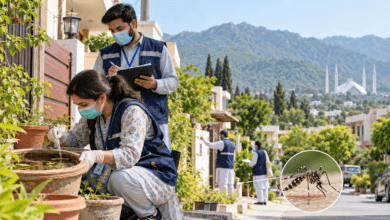
Islamabad Steps Up Dengue Crackdown as 8,045 Mosquito Breeding Sites Eliminated
District Health Office Islamabad reports 47 dengue cases between January 1 and October 18, with 34 from rural areas and 13 from urban localities; anti-dengue teams conduct more than 404,000 surveillance and control activities in October.

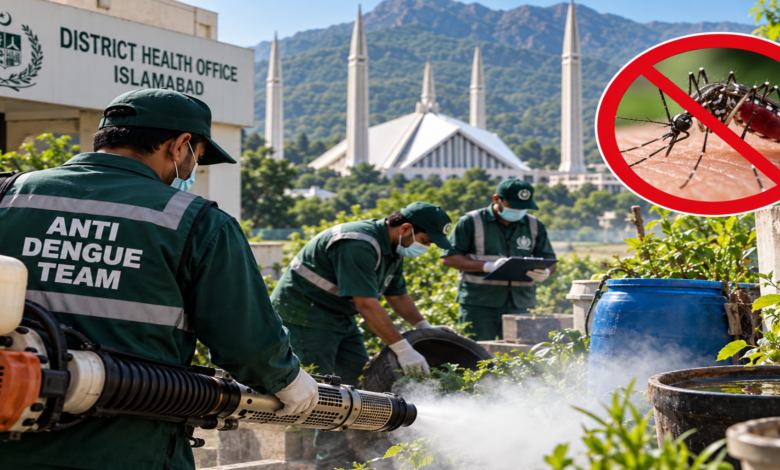
ISLAMABAD: Authorities have intensified dengue prevention and control operations across the federal capital, with the District Health Office Islamabad strengthening surveillance and vector-control measures, particularly at identified hotspots and high-risk areas, to prevent the spread of the mosquito-borne disease.
According to the latest surveillance figures, Islamabad reported 47 dengue cases between January 1 and October 18, 2026. Of these, 34 cases were recorded in rural areas, while 13 were reported from urban localities.
The District Health Office said anti-dengue teams carried out 404,704 surveillance and control activities across Islamabad between October 1 and October 18, 2026. The activities included indoor and outdoor inspections, visits to identified hotspots, detection of mosquito breeding sites and public awareness campaigns aimed at reducing the risk of dengue transmission.
During these operations, teams identified and eliminated 8,045 locations where mosquito larvae were breeding. They also conducted visits to 12,398 hotspot locations as part of efforts to strengthen surveillance in areas considered vulnerable to dengue transmission.
Indoor surveillance continued on a large scale, with anti-dengue teams inspecting 80,761 houses during the reporting period. The inspections were aimed at identifying potential mosquito breeding sites and ensuring that preventive measures were taken to reduce the risk of further transmission.
Coordination and Public Awareness
The District Health Office Islamabad, in coordination with the Ministry of National Health Services, Regulations and Coordination (NHSR&C), emphasised that sustained field surveillance, timely identification and elimination of mosquito breeding sites, regular monitoring of hotspots and active community participation are essential to controlling dengue.
Residents have been urged to cooperate with anti-dengue teams and ensure that water containers, rooftops, courtyards and other areas where mosquitoes can breed remain clean and free of stagnant water. Authorities have also stressed the importance of regularly checking residential and surrounding areas for potential breeding sites.
The District Health Office said it remains committed to strengthening surveillance systems, ensuring timely preventive interventions and implementing effective dengue-control strategies in coordination with the Ministry of National Health Services. The measures are intended to protect public health and prevent further spread of dengue across Islamabad.