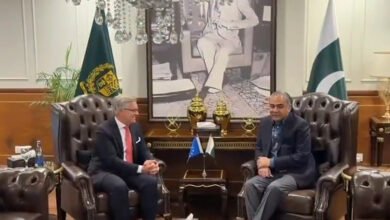
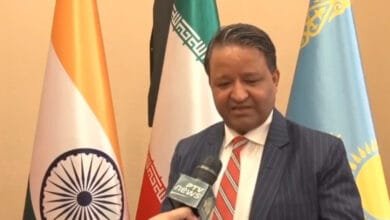
Pakistan takes ECO chair as Islamabad meeting adopts regional cooperation roadmap
The Islamabad Communiqué backs Pakistan and Qatar’s mediation efforts, sets out economic cooperation priorities through 2035 and calls for stronger trade, transport, energy and digital links.

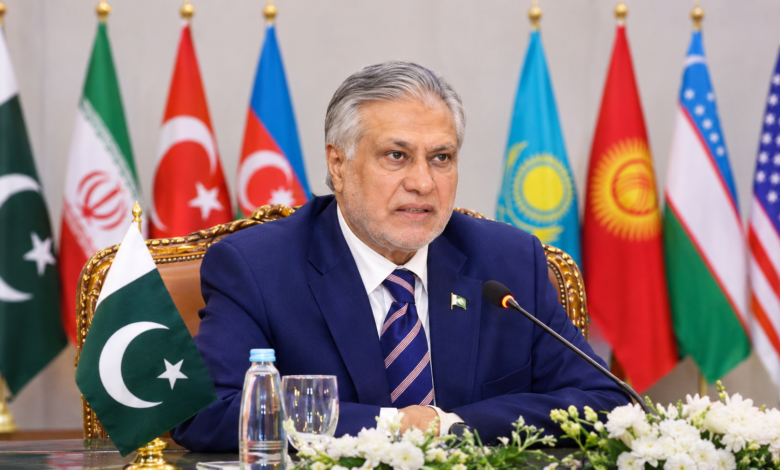
ISLAMABAD: Pakistan has assumed the Economic Cooperation Organisation’s chairmanship for 2026–2027 as member states adopted the Islamabad Communiqué and a long-term economic cooperation framework at the organisation’s 30th Council of Ministers meeting in the federal capital.
Chaired by Deputy Prime Minister and Foreign Minister Ishaq Dar, the meeting concluded on November 16 with the adoption of the Strategic Goals of Economic Cooperation–2035, setting the direction for deeper regional economic cooperation over the coming decade.
The ministerial gathering brought together foreign ministers and heads of delegations from ECO member states, alongside representatives of the organisation’s secretariat and subsidiary bodies. It followed preparatory discussions by senior officials during the November 15–16 programme.
Pakistan Assumes ECO Chairmanship for 2026–2027
Pakistan will lead the organisation under the theme “Reviving Regionalism for a Resilient ECO”, with an emphasis on improving regional connectivity, expanding economic integration and strengthening trade and logistics links. The Foreign Office has identified positioning Pakistan as a regional connectivity hub as a central objective of the chairmanship.
The communiqué also endorsed diplomatic efforts to ease tensions between Iran and the United States. Ministers commended Pakistan’s mediation and expressed support for the efforts of Pakistan and Qatar, while welcoming an Iranian initiative aimed at securing a negotiated resolution and a lasting end to the conflict.
Member states stressed the importance of restraint, dialogue, respect for international law and diplomatic engagement in addressing regional disputes.
Pakistan’s contribution included the Islamabad Peace Talks and the resulting Islamabad memorandum of understanding, which were recognised as part of the diplomatic process.
Trade, Investment and Regional Connectivity
On the economic agenda, ministers reaffirmed the importance of expanding trade and investment and called for early progress on a feasibility study for proposed joint trade zones. They also emphasised transport, transit and digital connectivity as priorities for closer regional integration.
The communiqué encouraged joint measures to attract investment, develop free economic zones, establish manufacturing partnerships and strengthen regional supply chains. It also supported small and medium-sized businesses and measures to improve their access to export markets.
Trade facilitation proposals included digitalising import and export procedures, exchanging trade documents electronically and developing single-window systems to reduce processing times and customs clearance costs, subject to national legislation.
Cooperation in Technology, Minerals and Energy
Ministers agreed to strengthen cooperation in artificial intelligence and emerging technologies through exchanges of expertise, training and joint research. They also welcomed a five-year minerals cooperation roadmap covering 2026–2030.
Energy security featured prominently, with member states calling for progress towards a proposed regional electricity market and greater support for regional energy initiatives. Cooperation in agriculture, industry and food security was also included among the agreed priorities.
Lahore Named ECO Tourism Capital for 2027
The tourism agenda welcomed Lahore’s designation as the ECO Tourism Capital for 2027. The subsequent host cities are Mary in Turkmenistan in 2028, Karakol in Kyrgyzstan in 2029 and Aktau in Kazakhstan in 2030.
ECO Calls for Humanitarian Relief in Gaza
The communiqué expressed concern over the humanitarian situation in Gaza and called for the urgent provision of food, medicines and other essential relief supplies. It also called for an end to forced displacement and policies depriving civilians of food.
On Afghanistan, ministers agreed to continue consultations concerning its full participation in the organisation.
Implementation of Regional Economic Commitments
The economic commitments will require follow-up decisions and implementation by member governments. The proposed trade zones and regional electricity market remain initiatives requiring further preparatory work.
Dar, in his concluding remarks, called for the agreed priorities to be translated into practical action through clear objectives, realistic timelines and effective follow-up arrangements.
The visiting foreign ministers and delegation heads also met Prime Minister Shehbaz Sharif in Islamabad. He welcomed the communiqué and the 2026–2035 strategic framework, urging initiatives that deliver measurable benefits to people across the region.
About the Economic Cooperation Organisation
Established in 1985 by Pakistan, Iran and Türkiye, ECO expanded in 1992 to include Afghanistan, Azerbaijan, Kazakhstan, Kyrgyzstan, Tajikistan, Turkmenistan and Uzbekistan. The organisation provides a platform for cooperation linking South Asia, Central Asia and West Asia.
Member states thanked Pakistan for hosting the Islamabad meeting and acknowledged Dar’s chairmanship of the proceedings.