IIUI Student Dies Weeks After Stray Dog Bite
Students call for protest following Sufyan Abbasi’s death, alleging repeated complaints about stray dogs on campus went unaddressed.

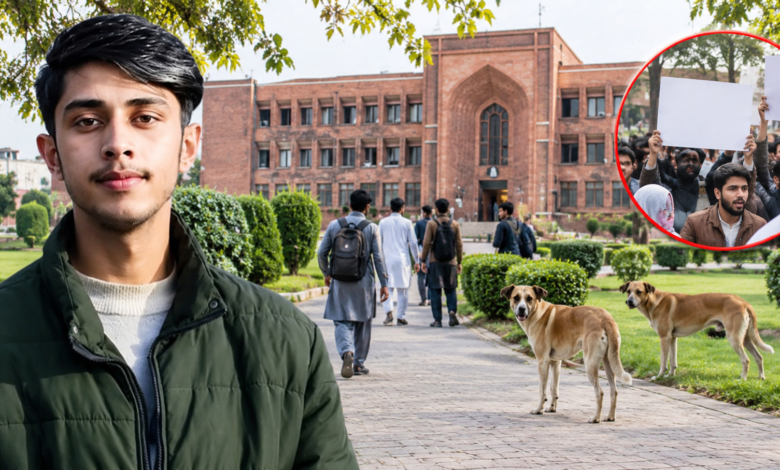
ISLAMABAD: The death of a student at the International Islamic University Islamabad (IIUI), nearly a month after he was reportedly bitten by a stray dog on campus, has sparked outrage among students, prompted a protest call and renewed questions over the effectiveness of the Capital Development Authority (CDA) and Metropolitan Corporation Islamabad’s (MCI) longstanding stray-dog population control campaign.
The deceased, identified in reports as Sufyan Abbasi, was a fifth-semester Bachelor of Science in Information Technology student from Dhir Kot in Azad Jammu and Kashmir. He was reportedly the only brother of five sisters.
According to fellow students, Sufyan was bitten by a suspected rabid dog outside Hostel No. 5 last month. He was subsequently taken to Holy Family Hospital in Rawalpindi, where he reportedly received an anti-rabies vaccine.
He later resumed attending university classes, but his condition deteriorated on Sunday night, prompting his family to seek further medical assistance. Despite treatment, he could not survive.
Students Announce Protest, Demand Investigation
The incident has triggered anger among university students, particularly those residing in hostels, who allege that the presence of stray dogs has been a longstanding safety concern.
Students announced a protest for Wednesday, November 18, at 10am on the university campus, demanding a transparent investigation into Sufyan’s death and immediate measures to prevent similar incidents.
They have also called for the identification of any administrative negligence and an effective response to the presence of stray animals around residential facilities.
According to students, complaints about stray dogs had repeatedly been brought to the attention of university authorities, but the problem remained unresolved.
Hostel residents say the presence of dogs around residential buildings makes movement difficult, particularly at night, when students travel between hostels, academic departments and other university facilities.
IIUI Administration Explains How Dogs Enter Campus
Responding to concerns, an IIUI spokesperson expressed condolences to the bereaved family and explained that the university had taken measures to restrict the entry of stray animals.
According to the spokesperson, security guards are deployed at the university’s main entrances, while a boundary wall surrounds the campus.
However, stray dogs reportedly enter through areas adjoining railway tracks and stormwater drains, which provide alternative access routes.
The spokesperson said measures had been taken to block these passages.
The university also maintained that, because killing stray dogs is prohibited, it had repeatedly written to relevant departments requesting their removal from campus.
Is Stray-Dog Management CDA’s Responsibility?
The incident has also brought the role of Islamabad’s civic authorities into focus.
Stray-dog population management in the federal capital is not exclusively an internal university matter. The CDA and MCI have previously acknowledged their operational involvement in addressing complaints about stray dogs across Islamabad.
However, the university administration remains responsible for managing foreseeable safety risks within its own premises, including student hostels and internal pathways.
CDA and MCI Launched Major Campaign in 2025
The latest incident comes against the background of an extensive stray-dog management campaign announced by CDA and MCI in September 2025.
On September 27, 2025, the civic authorities said joint teams had accelerated operations across Islamabad in response to growing public complaints about stray dogs.
According to CDA’s official announcement, more than 550 stray dogs had been shifted to the Stray Dog Population Control Centre in the Tarmri area between July and September 2025.
The operation covered several residential sectors and localities, including F-6, F-7, I-9, I-10, G-10, F-11, G-14, D-12, Saidpur, Margalla Town and Bhara Kahu.
The authorities also announced that citizens could report stray-dog complaints through the 24-hour helpline 1334 or the Deputy Commissioner’s complaint portal.
The programme was based on the Trap, Neuter, Vaccinate and Release (TNVR) approach, under which dogs are captured, sterilised, vaccinated and subsequently released or relocated in accordance with the applicable management arrangements.
However, the latest university incident has renewed questions about the programme’s reach, particularly whether educational institutions and student residential facilities were adequately covered.
Earlier Campaign Faced Operational Problems
The history of Islamabad’s stray-dog control programme also reveals longstanding administrative and operational difficulties.
The Stray Dogs Population Control Centre was established in 2022 under arrangements involving municipal authorities following judicial intervention.
It was intended to provide a systematic alternative to indiscriminate killing by sterilising and vaccinating free-roaming dogs.
However, reports published in January 2025 highlighted shortages of funds and staff, along with difficulties maintaining regular operations.
Further reporting in September 2025 indicated that the programme had experienced a decline after an earlier operational contract expired in December 2024.
The problems attracted the attention of Federal Ombudsman Ejaz Ahmad Qureshi, who took notice on September 25, 2025, of the increasing stray-dog population and dog-bite complaints in Islamabad.
The ombudsman directed CDA and MCI to take urgent remedial measures.
Following the intervention, the authorities intensified their campaign. Officials reported that 275 dogs were captured and shifted to the population control centre during a three-day operation in September 2025.
Islamabad High Court Banned Indiscriminate Killing
The legal framework governing stray-dog management is another important dimension of the controversy.
In May 2026, the Islamabad High Court imposed a permanent prohibition on poisoning, shooting and indiscriminate killing of stray dogs in the federal capital.
The court directed relevant authorities, including CDA, MCI and the Islamabad administration, to implement humane population management methods based on sterilisation and vaccination.
Questions Over Medical Treatment
The circumstances surrounding Sufyan’s reported treatment have also raised medical questions.
According to available information , he received an anti-rabies vaccine at Holy Family Hospital following the bite.
However, the number of doses administered, whether the recommended vaccination schedule was completed and whether rabies immunoglobulin was indicated or provided have not been established.
Under World Health Organization guidance, prompt and appropriate post-exposure prophylaxis is highly effective in preventing rabies when administered before symptoms develop.
Who Will Answer for Campus Safety?
Sufyan’s death has raised questions extending beyond the university’s immediate security arrangements.
Students are seeking answers about whether earlier warnings were formally recorded, whether the university requested assistance from municipal authorities and whether effective action was taken.