Rulers Fear the Public, Are Responsible for Unrest: Allama Nasir Abbas
Senate opposition leader accuses federal government of disregarding Khyber Pakhtunkhwa’s electoral mandate, questions Sohail Afridi’s detention and reveals details of unsuccessful negotiations with the government.


ISLAMABAD, October 11, 2026: Leader of the Opposition in the Senate, Allama Raja Nasir Abbas Jafri, has strongly condemned the imposition of emergency and governor’s rule in Khyber Pakhtunkhwa, accusing the federal government of undermining the province’s electoral mandate and describing October 11 as a black day in Pakistan’s history.
Opposition Leader Condemns Emergency in KP
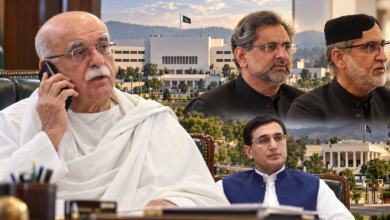
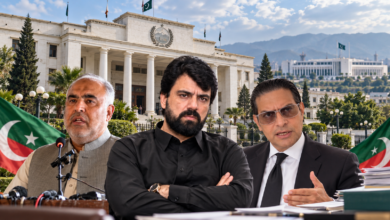
Addressing a press conference in Islamabad alongside Pakistan Tehreek-e-Insaf (PTI) Chairman Barrister Gohar Ali Khan, Abbas said Pakistan was a federation whose provinces were united under a single Constitution. He argued that the federal government’s decision to remove an elected provincial administration raised serious questions about constitutional governance, democratic representation and provincial rights.
He said the people had given PTI founder Imran Khan a majority mandate in the elections, alleging that the ruling parties had repeatedly targeted PTI because they feared its public support.
Abbas accused the government of contributing to political instability at a time when the country was already facing economic difficulties and serious law-and-order challenges.
Questioning the decision to impose emergency and governor’s rule in Khyber Pakhtunkhwa, he said the province’s elected government enjoyed a two-thirds majority but had nevertheless been removed through federal intervention.
He maintained that the decision had disregarded the mandate of millions of voters and risked creating further tensions between the federation and Khyber Pakhtunkhwa.
Questions Raised Over Electoral Mandate and Provincial Rights
Referring to the province’s population, Abbas said Khyber Pakhtunkhwa was home to approximately 40 million people, including what he described as more than 20 million young citizens. He questioned what message the federal government was sending to young voters about the importance of their participation in democratic elections.
He alleged that the people of Khyber Pakhtunkhwa and their elected representatives were being pushed aside despite having exercised their democratic rights.
The opposition leader also questioned the federal government’s approach to security challenges in Balochistan, asking why similar emergency measures were not being considered there and whether such interventions could guarantee lasting peace.
Abbas raised questions over the reported arrest of Khyber Pakhtunkhwa Chief Minister Sohail Afridi, demanding to know under which legal provisions an elected chief minister could be taken into custody.
He alleged that the federal government had already formulated a plan to remove the PTI administration in Khyber Pakhtunkhwa and that the latest developments were part of that strategy.
Strong Criticism of Federal Leadership
Expressing strong criticism of Prime Minister Shehbaz Sharif and President Asif Ali Zardari, Abbas accused the country’s senior leadership of failing to appreciate the seriousness of the constitutional and political situation.
He said the government’s actions had created obstacles to building a stronger and more prosperous Pakistan, comparing those obstacles to the towering mountains of K2.
The senator further alleged that the ruling leadership did not consider itself accountable either to the public or to God. In another strongly worded criticism, he claimed that the government’s decisions had caused greater damage to the country than attacks from India.
Opposition Claims Negotiations Faced Setbacks
Discussing negotiations between the government and opposition, Abbas claimed that the two sides had made considerable progress before talks encountered serious disagreements.
According to him, government representatives had initially indicated that the opposition could be facilitated in meeting PTI founder Imran Khan if it agreed to end the ongoing long march.
However, he said government negotiators subsequently informed the opposition that a meeting with Imran Khan could not be arranged.
Abbas also claimed that the government demanded unconditional opposition support for a security operation during the negotiations.
He maintained that these conditions had complicated efforts to resolve the political confrontation through dialogue.
PTI Vows to Continue Long March
Rejecting calls to end the opposition’s mobilisation, Abbas insisted that the long march was being conducted in accordance with the law and would continue.
He accused the federal government of pursuing confrontation rather than respecting the democratic mandate of the province, warning that attempts to disregard the public’s electoral choice could deepen political divisions.
Reaffirming his support for Sohail Afridi, Abbas said the PTI leader was not alone and that the opposition stood firmly alongside him.
Federal Government Cites Security Concerns
His remarks came after President Asif Ali Zardari approved the imposition of emergency and governor’s rule in Khyber Pakhtunkhwa on the advice of Prime Minister Shehbaz Sharif under Articles 232 and 234 of the Constitution.
The federal government has cited the deteriorating security situation and what it describes as inadequate cooperation from the provincial administration in addressing security challenges as the basis for its decision.
Under the announced arrangements, the provincial government’s functions have been transferred to the governor, assisted by an 11-member advisory council.
Abbas, however, rejected the government’s approach and maintained that the opposition would continue its political struggle, insisting that the people of Khyber Pakhtunkhwa should not be deprived of the mandate they had given through the electoral process.