
Unrest in Balochistan too: why emergency only in KP? Maulana Fazlur Rehman
JUI-F chief says political understandings had been reached before Ishaq Dar informed him of emergency plans, questioning why similar security concerns in Balochistan had not prompted the same response.

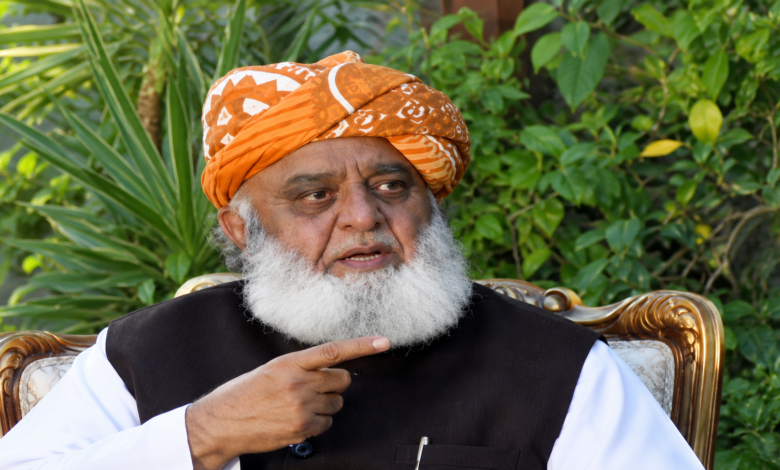
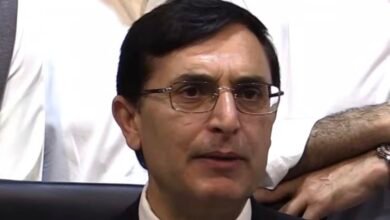
ISLAMABAD, October 11, 2026: Jamiat Ulema-e-Islam-Fazl (JUI-F) chief Maulana Fazlur Rehman has strongly questioned the federal government’s decision to impose emergency measures and governor’s rule in Khyber Pakhtunkhwa, revealing that political discussions aimed at resolving the crisis had already reached an understanding before he was informed of the government’s decision.
Fazlur Rehman Says Political Understanding Was Reached
Addressing a press conference on Sunday, Fazlur Rehman said that matters had been settled through political consultations and that he was preparing to travel to Peshawar to hold further discussions with the provincial leadership.
According to remarks circulated on social media, the JUI-F chief said Deputy Prime Minister Ishaq Dar telephoned him at approximately 10am and informed him that the federal government was proceeding with emergency measures in Khyber Pakhtunkhwa.
Fazlur Rehman said he immediately questioned the reasoning behind the decision. According to his account, Dar referred to the security situation and militant activity in the province as justification for the move.
The JUI-F leader challenged the government’s explanation by drawing attention to security conditions in neighbouring Balochistan.
He questioned why similar constitutional measures were not being applied in Balochistan despite the security and law-and-order difficulties confronting that province.
Political Understanding Before Emergency Decision
Fazlur Rehman’s remarks came after several rounds of political contacts involving the federal government, the JUI-F leadership and Pakistan Tehreek-e-Insaf (PTI) representatives.
The JUI-F chief had been engaged in efforts to reduce political tensions between Islamabad and the PTI-led provincial administration.
According to his account of the negotiations, he had spoken with PTI leaders, including Sohail Afridi, Barrister Gohar Ali Khan and Asad Qaiser, about possible arrangements for resolving the confrontation.
He also referred to discussions with Prime Minister Shehbaz Sharif concerning the PTI leadership’s demands, including matters relating to meetings with former Prime Minister Imran Khan and his medical care.
Fazlur Rehman maintained that the government had made commitments during these discussions but subsequently failed to honour them.
He expressed disappointment that emergency measures were introduced despite the political engagement already undertaken.
JUI-F Rejects Governor’s Rule
The JUI-F chief rejected the imposition of emergency measures and governor’s rule in Khyber Pakhtunkhwa, arguing that political and constitutional disagreements should be resolved through dialogue rather than federal intervention.
He indicated that his party would formulate a political response to the decision.
Fazlur Rehman also questioned the effectiveness of previous security operations and called for an examination of the government’s broader approach to restoring stability.
His position underscored the widening differences over the federal government’s handling of the crisis, particularly after efforts to secure a negotiated settlement.
Federal Government Defends Decision
Earlier on Sunday, President Asif Ali Zardari approved the imposition of emergency measures and governor’s rule in Khyber Pakhtunkhwa on the advice of Prime Minister Shehbaz Sharif, following recommendations from the federal cabinet.
The government invoked Articles 232 and 234 of the Constitution, citing deteriorating security conditions and what it described as insufficient cooperation from the provincial administration in addressing militant activity.
Federal Law Minister Azam Nazeer Tarar subsequently announced that an 11-member Advisory Council had been established to assist the provincial governor in administering government affairs.
The federal government maintained that the measures were constitutionally justified and necessary to address security and administrative challenges.
Balochistan Comparison Raises Questions
Fazlur Rehman’s comparison with Balochistan formed a central part of his criticism, as he questioned the government’s decision to apply emergency provisions specifically to Khyber Pakhtunkhwa.
The JUI-F chief’s remarks highlighted his concerns about the consistency of the federal government’s approach to provincial security challenges.
His account of the negotiations and the subsequent emergency decision has added another dimension to the political dispute, raising questions about the future of government-opposition dialogue.
With JUI-F rejecting the decision and the federal government defending its constitutional authority, the disagreement over Khyber Pakhtunkhwa’s governance remains unresolved.

One Comment