CSS, Promotions and Senior Appointments Face Major Changes Under Reform Plan
Proposals discussed under Planning Minister Ahsan Iqbal include specialised professional cadres, changes to CSS recruitment, performance-linked incentives, greater use of technology and competitive appointments to selected senior federal posts.

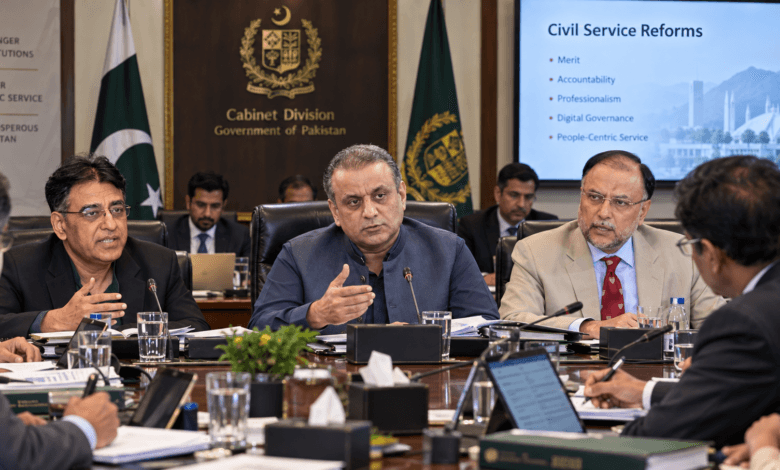
ISLAMABAD: The federal government has moved closer to a major restructuring of Pakistan’s civil service, with broad agreement reached on 43 of 46 recommendations developed as part of the government’s reform process, according to the Ministry of Planning and recent reporting on the proposals.
Federal Minister for Planning, Development and Special Initiatives Ahsan Iqbal chaired a multi-party consultative session in Islamabad bringing together political leaders, policy experts and sectoral stakeholders. The Planning Ministry said the proposed framework is intended to create a more specialised, merit-based, accountable and technology-enabled public administration.
Specialised Cadres and National Executive Service Proposed
Among the most significant proposals is the creation of specialised professional cadres covering areas including human resources, law, engineering, science and technology, IT and telecom, energy, climate, agriculture and forestry, education and health. The Establishment Division could also be reorganised into a Human Resource and Organisation Development Division.
The proposals would also significantly alter recruitment and career progression. Under a proposed National Executive Service framework, selected BS-20 and above federal positions could be opened to competition involving serving government officers, academics and private-sector professionals on fixed-term contracts linked to predetermined performance targets. Police and Foreign Service positions would remain outside the proposed arrangement.
CSS itself is not proposed to be abolished. The reform package includes proposals allowing candidates greater flexibility in attempting compulsory papers in Urdu, while retaining English proficiency requirements. It also envisages digitisation of recruitment, a shorter recruitment cycle and changes to screening and competency assessment.
Performance-Based Management and Training Reforms
Performance management is another major component. Proposals include ministry-level performance agreements, more frequent evaluation of officials and financial incentives linked to performance. Training arrangements could also be restructured, including establishment of a National University of Public Administration and greater emphasis on specialised, domain-specific training.
The Planning Ministry said the reform exercise has been informed by international civil-service models and is intended to address the requirements of an increasingly complex economic, technological and developmental environment.
The recommendations remain proposals within the government reform and approval process; reporting them as already implemented rules would therefore be premature. Recent reporting says an implementation mechanism would follow approval of the package.