Audit Report Declares Appointment of Two Islamabad Chief Commissioners ‘Illegal’
The Audit Report 2024-25 states that the appointments of Capt. (R) Muhammad Anwar ul Haq and Chaudhry Muhammad Ali Randhawa as Chief Commissioners Islamabad were made without mandatory presidential approval under the Presidential Order, 1980, and terms the Establishment Division’s justification “unsatisfactory and unacceptable.”

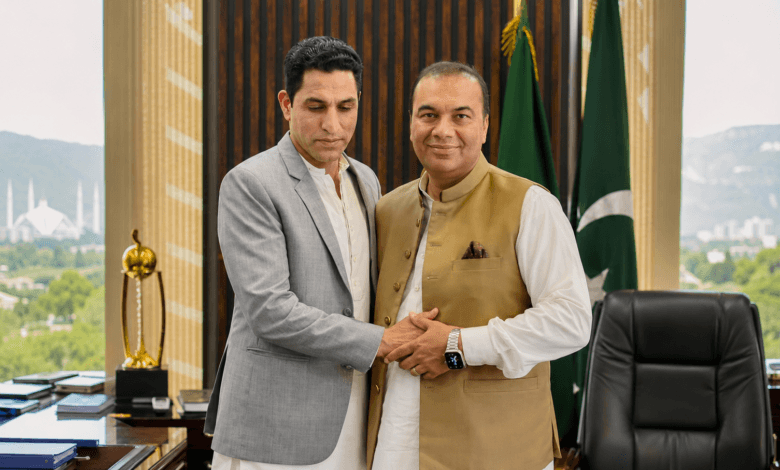
ISLAMABAD: A significant observation in the Audit Report 2024-25 has questioned the legality of the appointments of former Chief Commissioners Islamabad, Capt. (R) Muhammad Anwar ul Haq and Chaudhry Muhammad Ali Randhawa, stating that their appointments were made in violation of the Presidential Order, 1980.
Audit Cites Presidential Order, 1980
According to the audit report, the Presidential Order, 1980 vests the administrative authority over the Islamabad Capital Territory (ICT) exclusively in the President of Pakistan.
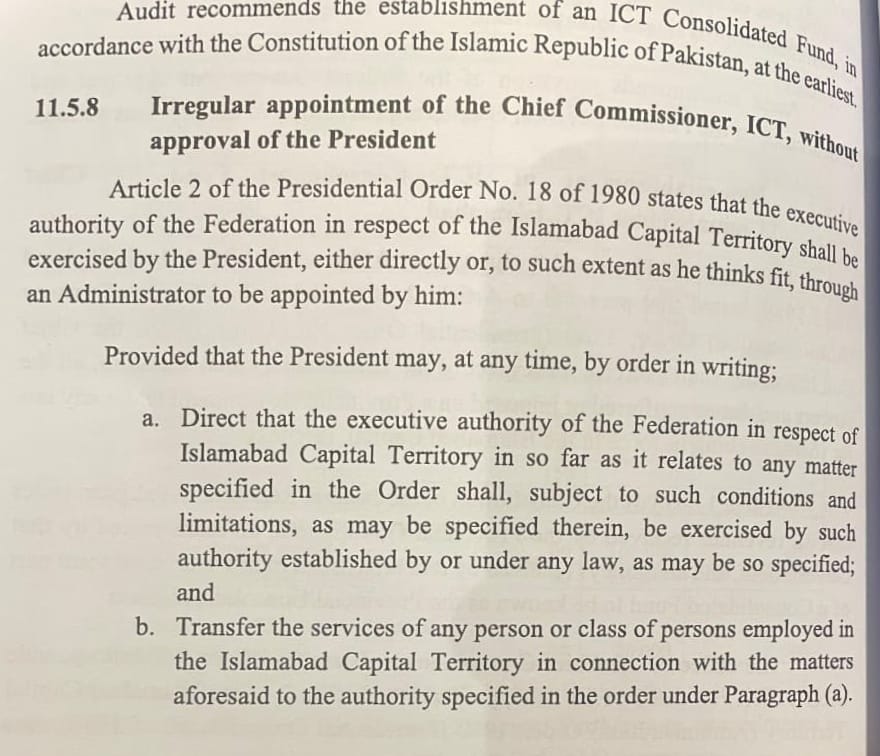
The report notes that:
- The President may delegate powers or transfer services through a written order.
- No such written delegation or approval was found on record for the appointments under review.
Appointments Questioned
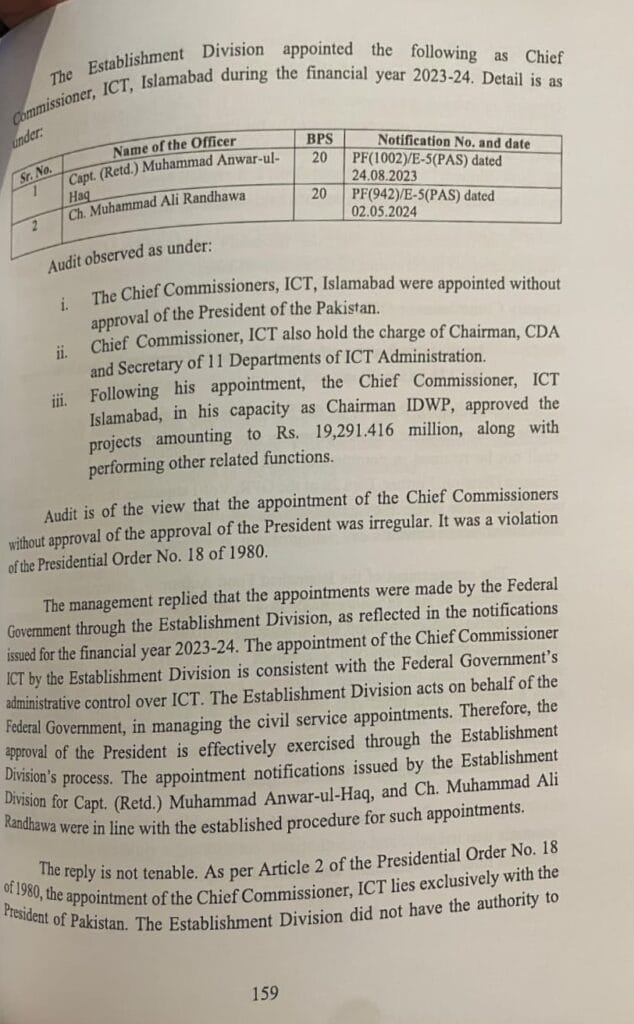
The audit states that during financial year 2023-24, Capt. (R) Muhammad Anwar ul Haq and Chaudhry Muhammad Ali Randhawa were appointed as Chief Commissioners Islamabad without obtaining the President’s approval as required under the Presidential Order.
Additional Administrative Responsibilities
It further points out that the Chief Commissioner simultaneously held:
- Additional charge of Chairman Capital Development Authority (CDA).
- Additional charge as Secretary of 11 departments of the Islamabad Administration.
The report states that the office exercised extensive administrative authority.
Development Projects Worth Rs19.29 Billion
According to the report, the office approved development projects and other official matters worth approximately Rs19.29 billion during the relevant period.
Islamabad Administration’s Response
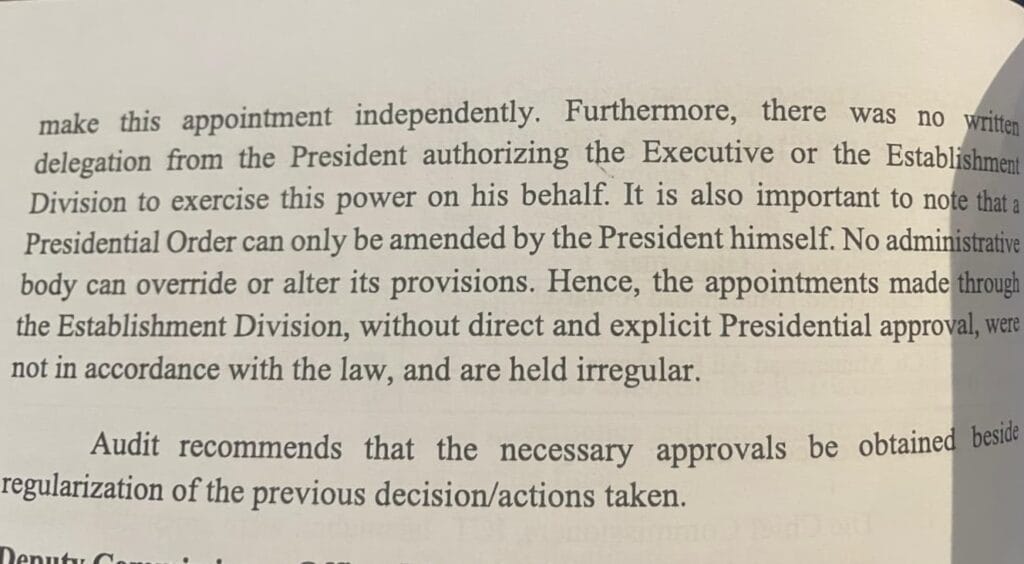
In response to the audit observations, the Islamabad administration argued that the appointments were made by the Establishment Division under the administrative control of the Federal Government and therefore should be deemed to have presidential approval.
However, the audit rejected this explanation, describing the Establishment Division’s response as “unsatisfactory and unacceptable.”
Audit’s Position
The report maintains that:
- The Establishment Division had no independent legal authority to appoint the Chief Commissioner Islamabad under the Presidential Order, 1980.
- Only the President of Pakistan has the authority to amend or alter the Presidential Order.
- No executive or administrative institution can override or modify its provisions.
- No written document was available to establish that the President had delegated these appointment powers to the Establishment Division or any executive authority.
Matter Subject to Legal Process
The audit observations are part of the Audit Report 2024-25.
Any determination regarding legality, responsibility, or subsequent administrative action will be subject to the relevant constitutional, legal, and governmental processes.